
How to Fix Hot Water Pressure Problems at Home
Last Updated: November 5, 2026
Quick Summary
Hot water pressure problems troubleshooting starts at the tap: test the pressure at each outlet and check the isolation valve and inlet valve are fully open. If cold pressure is fine and hot is weak everywhere, the fault is almost always on the hot water side.
- Strong hot flow everywhere except one tap means the fault sits at that outlet.
- Weak hot and weak cold together point to your mains supply or a pressure-reducing valve.
- A partly closed inlet valve cuts flow and mimics a bigger fault.
- Sediment weakens flow gradually over months, while a tempering valve fault causes hot-then-cold swings.
- Only a licensed plumber should adjust, test or replace a tempering valve.
Table of Contents
- Start With the Simple Checks Before You Call Anyone
- Low Hot Water Pressure but Cold Is Fine: What That Tells You
- Hot Water Pressure Low at One Tap Only
- Blocked Hot Water Pipe Symptoms You Should Not Ignore
- Hot Water Tempering Valve Problems and How to Spot Them
- System-Specific Troubleshooting for Gas, Electric and Heat Pump Units
- Book a Licensed Plumber to Restore Your Hot Water Pressure
- Frequently Asked Questions
Start With the Simple Checks Before You Call Anyone
Hot water pressure problems troubleshooting starts at the tap, not the toolbox. Before you ring anyone, test the pressure at each outlet and check two valves. Those three checks solve a surprising share of low-pressure complaints, and they cost nothing.
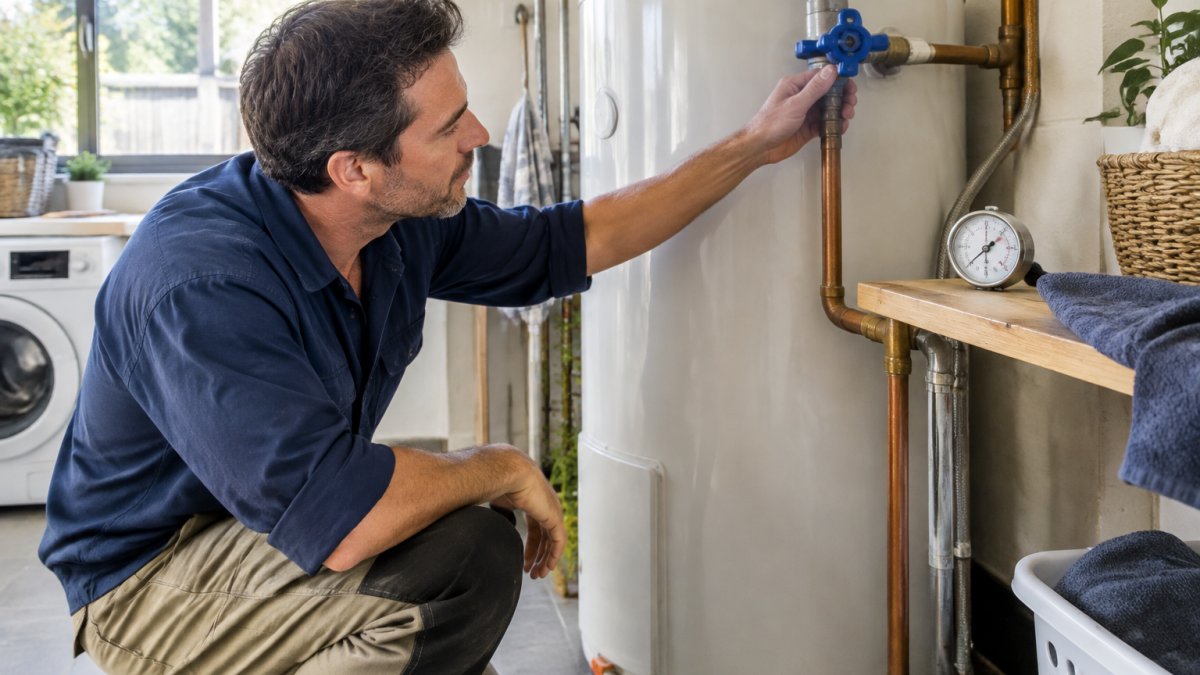
Most faults fall into a short list of causes: blockages, valves, tempering valves, or a failing unit.
Here is the order we use.
Test the Pressure at Every Outlet
Turn on the hot tap at the kitchen sink, then the bathroom basin, then the shower. Note how strong the flow feels at each one.
- Strong hot flow everywhere except one tap: the fault sits at that outlet
- Weak hot flow at every tap: the problem is upstream, at the unit or the main line
- Weak hot and weak cold together: suspect your mains supply or a pressure-reducing valve
If cold pressure is fine and hot is weak everywhere, the fault is almost always on the hot water side. That narrows things fast.
Check the Isolation Valve and Inlet Valve
Find the isolation valve near your hot water unit. It is usually a small tap on the cold inlet pipe. Make sure it is fully open, not half-turned.
Then check the inlet valve on the unit itself. A partly closed valve cuts flow and mimics a bigger fault. This is one of the most common mistakes we see.
If those checks are clear, the problem is deeper. Our guide on what to do when your hot water system breaks down covers the next steps and when to call a plumber.
Low Hot Water Pressure but Cold Is Fine: What That Tells You
When hot water pressure is low but cold runs strong, the restriction sits between the cold main and your hot taps.
That leaves four usual suspects:
- Sediment and scale built up inside the unit or pipes
- A failing tempering valve mixing too much cold in
- A blocked hot water pipe or clogged aerator
Each one behaves differently. Sediment tends to weaken flow gradually over months. A tempering valve fault often shows as hot-then-cold swings.
If your hot water also runs cold mid-shower, that points to a different fault. Our guide on how to stop hot water going cold mid-shower walks through those causes.
When cold runs strong and hot runs weak, the restriction sits between the cold main and your hot taps, and these are the usual suspects.
| Cause | How it behaves |
|---|---|
| Sediment and scale in unit or pipes | Flow weakens gradually over months |
| Failing tempering valve | Hot-then-cold swings |
| Blocked hot water pipe or clogged aerator | Blocked aerator hits one outlet only |
| Worn washer or cartridge in hot tap | Restricts hot flow at that tap |
Hot Water Pressure Low at One Tap Only
A single weak hot tap is the easiest problem to fix. The restriction is at that outlet, not in your plumbing system.
Start with the aerator. Unscrew the small screen fitting on the end of the tap and rinse out any grit or mineral deposits.
If the aerator is clean, check the tap cartridge or washer.
Watch out: shut off the water before you take a tap apart.
Blocked Hot Water Pipe Symptoms You Should Not Ignore
Blocked hot water pipes rarely fail without warning. The signs build up over time, and catching them early saves you a repair bill.
Look for these symptoms:
- Flow that weakens slowly over weeks or months
- Taps that splutter or spit air before running steady
- Discoloured water, often brown or cloudy, on first use
Sediment and mineral deposits are the usual cause. Hard water leaves scale inside pipes and the hot water unit, narrowing the path for water.
Corroded pipes are a bigger concern. Rust-coloured water plus damp patches near a pipe run means the pipe is failing.
Hot Water Tempering Valve Problems and How to Spot Them
A tempering valve, also called a thermostatic mixing valve, sits on the hot outlet of your storage tank and blends cold water into the hot stream so the water arriving at your taps is at a safe temperature. It is a safety device first and a plumbing fitting second. When it fails, pressure and temperature both misbehave, and the symptoms are easy to misread as a failing hot water unit.
How the Valve Works
The valve has a thermostatic element that expands and contracts with temperature. As hot water leaves the tank, the element senses the mixed temperature and adjusts how much cold water is allowed in. The aim is to deliver water at the tap that is hot enough to use but cool enough not to scald. In most domestic installations the valve is set so the delivered temperature stays in a safe range, typically around 50°C at the outlet, while the tank itself is stored hotter to kill bacteria.
Signs the Tempering Valve Is Playing Up
- Hot water pressure drops while cold stays strong, especially at multiple outlets at once
- Water runs hot, then cold, then hot again in a cycle
- Taps deliver warm water only, never properly hot
A valve that is stuck open delivers water that is too hot, which is a scalding risk. A valve stuck closed or partly closed delivers weak, lukewarm water and mimics a failing unit. Both failure directions are common, and both are cheap to fix compared with a new system, so rule the valve out early.
Why You Should Not Adjust It Yourself
The tempering valve controls the temperature at the tap, and getting the setting wrong creates a scalding risk, particularly for children, older people, and anyone with reduced sensation or mobility.
Watch out: do not remove, bypass or wind open a tempering valve to chase stronger or hotter water.
Only a licensed plumber should adjust, test or replace a tempering valve.
System-Specific Troubleshooting for Gas, Electric and Heat Pump Units
Generic advice only goes so far. The right checks depend on what type of hot water unit you have, because each one converts energy to hot water in a different way and fails in a different order. Work through the branch that matches your unit.
Gas Continuous Flow and Storage Systems
A gas continuous flow unit only fires when it senses enough water flow through the heat exchanger. Drop the flow below its activation threshold and the burner will not light, so you get cold water at a weak trickle rather than hot water at low pressure.
- Check the inlet filter screen on the cold water connection for grit and scale. A partly blocked screen starves the flow sensor and the unit cuts in and out.
- Confirm the isolation valve on the cold inlet is fully open, not half-turned.
- Read the error code on the display panel and note it before you ring anyone. Codes point straight at the failed component.
For a gas storage tank, low hot pressure with a healthy cold supply usually means sediment has collected at the bottom of the tank and around the outlet. You may also hear rumbling as the burner heats through the sediment layer.
Electric Storage and Heat Pump Systems
An electric storage unit heats a tank of water with one or two elements controlled by thermostats. Low pressure here is rarely an electrical fault first; it is usually sediment, a failed element, or a tripped safety switch.
- Listen for rumbling or popping when the element heats. That is water trapped in sediment boiling, and it signals scale build-up at the bottom of the tank.
- Check the circuit breaker and the safety switch on the unit's circuit. A tripped breaker means the element or wiring has a fault.
- Test the pressure-relief valve by lifting its lever briefly and letting it reseat. A valve that drips continuously or will not reseat needs replacement.
A heat pump works differently from a standard electric tank because it moves heat rather than generating it, so its failure modes include refrigerant and airflow faults that a standard tank never has. Our guide on what a heat pump hot water system is and how it works explains the parts, so you know what to check.
Watch out: never open an electric unit's cover or touch the element or thermostat. The stored water is scalding and the wiring is live even with the breaker off at the switchboard if the circuit is not isolated and tested.
Matching the Symptom to the System
Use the pattern of the fault to narrow the branch before you start:
- Hot pressure weak everywhere, cold strong, unit is gas continuous flow: suspect the inlet filter screen or flow sensor first.
- Hot pressure weak everywhere, cold strong, unit is electric storage: suspect sediment at the outlet or a failed element.
- Hot water runs hot then cold in cycles, any system type: suspect the tempering valve before the unit.
That mapping is the part most generic guides skip, and it is usually what turns a call-out into a five-minute fix.
Book a Licensed Plumber to Restore Your Hot Water Pressure
If the simple checks come up empty, the fault needs a proper diagnosis. Sediment flushing, valve replacement and pipe repairs are jobs for a licensed plumber.
Northern Rivers Hot Water handles hot water repair and fault diagnosis across the region, with same-day service and all major brands covered. We also service gas hot water systems and every other system type.
Our team has over 20 years of local experience and holds NSW Plumbing Licence 230095C. We provide transparent upfront pricing, and there is no call-out fee for quotes.
Call us and we will find the cause and get your hot water flowing properly again.
Frequently Asked Questions
Why is my hot water pressure low but my cold water pressure is fine?
When cold water flows normally but hot water pressure is low, the restriction sits on the hot side of the plumbing system. Common causes include a partially closed isolation valve on the hot water unit, sediment or scale buildup inside the tank or outlet, a failing tempering valve, or a blocked aerator on a hot tap. Because the cold line bypasses the hot water unit entirely, the fault is almost always at the heater, its valves or the hot water pipework rather than the mains supply.
Can a blocked hot water pipe or filter reduce water pressure?
Yes. Blocked hot water pipe symptoms include a steady decline in flow at hot outlets, sputtering or discoloured water when a tap is first opened, and pressure that drops further as more hot taps run at once. Mineral deposits and scale narrow the pipe diameter over time, while sediment can clog inlet filters and aerators. Flushing the unit and cleaning aerators often restores flow, but persistent blockages may need a licensed plumber to inspect the pipework.
Could a faulty tempering valve cause low hot water pressure?
A tempering valve mixes cold water into the hot outlet to keep delivery at a safe temperature, typically around 50°C at outlets in bathrooms. When the valve cartridge jams, scales up or fails, it can restrict hot flow or deliver water that is too cool. Hot water tempering valve problems often show as low pressure combined with lukewarm water at showers and taps. These valves should be tested and replaced by a licensed plumber.
Can I safely troubleshoot a hot water system myself, or should I call a plumber?
You can safely check aerators, confirm the isolation valve is fully open, test pressure at multiple outlets and note whether the issue is at one tap or the whole house. Do not open the tempering valve, adjust the pressure-reducing valve, or flush a system unless you are confident with the procedure, and never touch electrical components at the circuit breaker panel beyond switching the unit off. If pressure does not improve after basic checks, call a licensed plumber rather than risk scalding, leaks or electrical faults.

Need help with your hot water system?
Call Northern Rivers Hot Water for a free, no-obligation quote. We service Lismore, Ballina, Byron Bay, Casino and all surrounding areas.
0472 580 441