
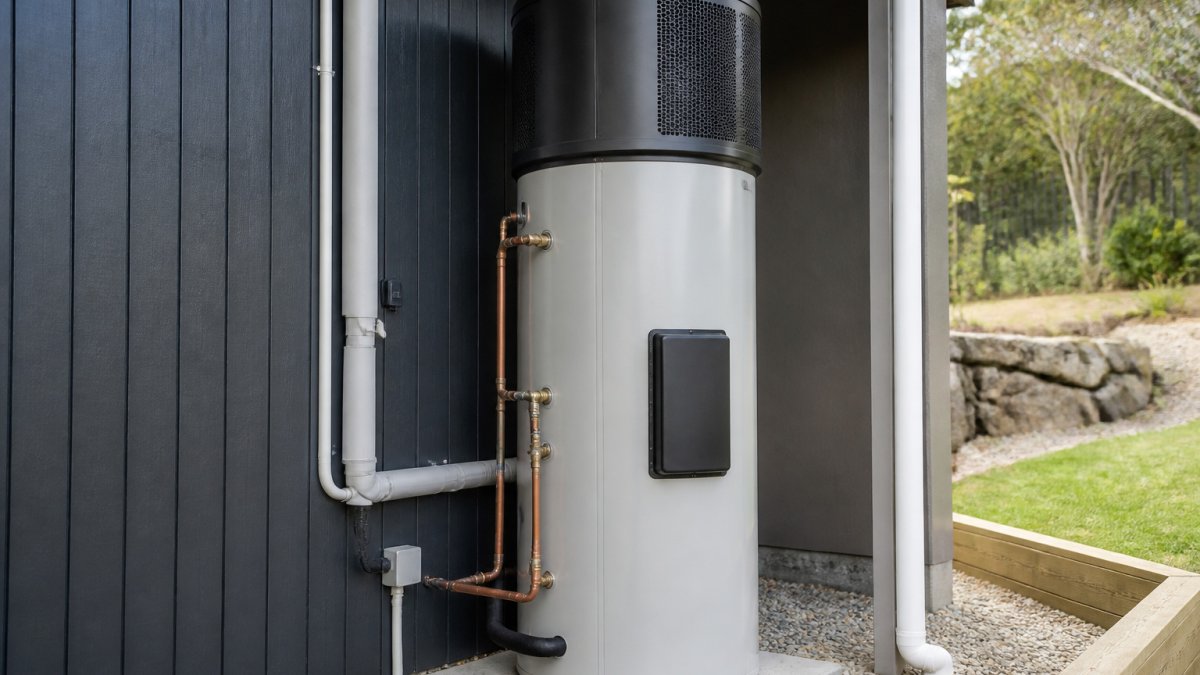
What Is a Heat Pump Hot Water System and How It Works
Last Updated: November 2, 2026
Quick Summary
A heat pump hot water system is a water heater that moves heat from surrounding air into a storage tank instead of generating it directly from electricity or gas. Because it transfers heat rather than creating it, it can deliver several units of heat for each unit of electricity it uses.
- It uses a refrigeration cycle, like a fridge running in reverse, to extract heat from ambient air.
- Most units are air-source, with an outdoor unit drawing in ambient air.
- A backup electric element switches on when air temperatures are too low for the heat pump.
- Output is strongest in mild, humid weather and drops during cold snaps.
- Upfront cost is higher than a conventional electric unit, but running costs can be lower.
Table of Contents
- What a Heat Pump Hot Water System Is
- How a Heat Pump Hot Water System Works
- Heat Pump Hot Water System Pros and Cons
- Heat Pump vs Electric Hot Water System: Running Costs and Efficiency
- Sizing, Space, Noise and Installation Constraints
- Heat Pump Hot Water System Lifespan and Maintenance
- Booking a Heat Pump Assessment for Your Home
- Frequently Asked Questions
What a Heat Pump Hot Water System Is
A heat pump hot water system is a water heater that moves heat from the surrounding air into a storage tank rather than generating it directly from electricity or gas. Check which heat pump hot water rebates you may be able to claim in the Northern Rivers.
This is the core reason heat pump hot water systems have become a serious option for Australian homes. Northern Rivers Hot Water supplies, installs and repairs heat pump systems alongside gas and electric units.
Most units are air-source systems, meaning the outdoor unit draws in ambient air. Water-to-water variants exist, but they are less common in residential installations.
How a Heat Pump Hot Water System Works
The process runs in a continuous loop. A fan draws air across an evaporator coil containing refrigerant, which boils at a low temperature and absorbs heat from the air.
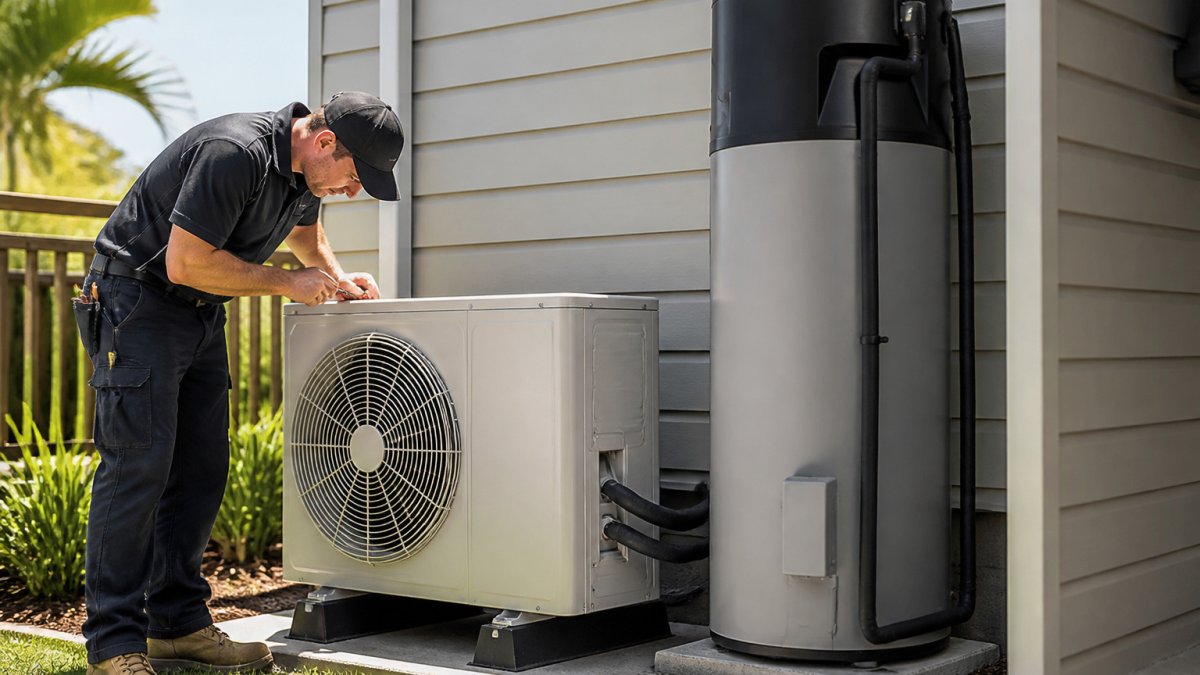
Efficiency is usually expressed as a coefficient of performance (COP), the ratio of heat delivered to electricity consumed.
Operation changes with the weather. On mild days the compressor does most of the work. On cold mornings, output falls and the backup element may run.
The Main Components Inside the Unit
The outdoor unit houses the fan, evaporator, compressor, expansion valve and, in most designs, the condenser coil. The insulated storage tank sits either inside or beside the building and holds the heated water.
When inspecting a unit, check that the evaporator fins are clear of debris, that the fan is unobstructed, and that the tank insulation is intact. These simple checks prevent many performance complaints.
Heat Transfer From Ambient Air to Water
Heat transfer relies on the refrigerant boiling at a temperature well below the air temperature, so it can absorb thermal energy even on cool days.
Because the heat source is air rather than the ground or a sealed loop, placement matters.
The table below summarises the main components of the unit and what each one does, as described in the article.
| Component | Role | Note |
|---|---|---|
| Fan | Draws air across the evaporator coil | Needs an unobstructed path |
| Evaporator | Refrigerant absorbs heat from the air | Boils at a low temperature |
| Compressor | Pressurises refrigerant, raising its temperature | Does most of the work on mild days |
| Condenser | Hot refrigerant transfers heat to tank water | Heats the stored water |
| Expansion valve | Drops refrigerant pressure and temperature | Returns it to the evaporator |
| Backup element | Supplementary electric heat | Runs when air is too cold |
Heat Pump Hot Water System Pros and Cons
The main advantage is energy efficiency.
The drawbacks are real. Upfront cost is higher than a conventional electric unit. The outdoor unit needs a suitable location with airflow and, in some cases, noise can be an issue for neighbours or bedrooms nearby.
A common mistake is choosing a system based on the headline efficiency figure alone. A unit that suits a large family with high demand may be oversized for a single occupant, and the wrong fit can erode the savings.
Heat Pump vs Electric Hot Water System: Running Costs and Efficiency
Compared with a conventional electric storage system, which converts electricity directly into heat at roughly one unit of heat per unit of electricity, a heat pump typically moves two to four units of heat per unit of electricity under mild conditions. If you are still weighing electric, heat pump and LPG options, this practical guide to choosing the right system walks through each one. That ratio, the coefficient of performance (COP), is the whole reason the running-cost gap exists. But the headline COP is not a running-cost figure. To compare systems honestly you need to convert it into kilowatt-hours, multiply by your tariff, and then account for standing losses, backup-element use and the tariff structure you are actually on.
A transparent running-cost method
You can build a defensible comparison in four steps without relying on generic marketing figures:
- Estimate daily hot water energy demand. A common planning figure is that each person uses roughly 30-50 litres of hot water a day, and heating water through a 60 °C rise takes about 0.07 kWh per litre before losses. A two-person household drawing 80 litres a day therefore needs roughly 5.6 kWh of delivered heat, plus standing losses from the tank.
- Divide by the system's effective COP. A heat pump running at an effective COP of 2.5 in cool conditions needs about 2.2 kWh of electricity for that 5.6 kWh of heat. A resistive electric element at COP 1.0 needs the full 5.6 kWh.
- Apply your tariff. Multiply each figure by your cents-per-kWh rate, including supply charges only where they change between options. If you are on a time-of-use plan, apply the rate that matches when the system actually heats.
- Add standing losses and backup-element hours. Tank insulation quality and the number of cold mornings that trigger the element can move the result by a meaningful margin, so ask the installer for the modelled annual consumption rather than estimating from the COP alone.
Energy rating and appliance energy labelling guidance
Why the tariff matters as much as the COP
A heat pump's advantage is largest when it runs on a cheap, steady electricity supply. On a flat-rate tariff the comparison is straightforward: lower kWh wins. On a time-of-use tariff the picture shifts, because a heat pump that heats during a cheap off-peak window compounds its efficiency advantage, while a resistive element heating at peak rates is doubly penalised. Conversely, some legacy off-peak plans were designed around storage electric systems that heat overnight, and a heat pump on the same controlled load can still win, but the timing of the heating cycle, not just the technology, drives the bill.
Where the comparison gets less clear-cut
Gas and solar systems complicate the picture. Gas running costs depend heavily on local gas prices and the appliance's star rating, and solar hot water performance depends on roof orientation, shading and booster use. A heat pump is less exposed to those variables, but its cold-weather performance is the trade-off to weigh. The honest conclusion is that no single technology wins everywhere: the right answer depends on your tariff, your climate, your daily demand and how long you plan to stay in the property.
Sizing, Space, Noise and Installation Constraints
Sizing is where most heat pump decisions are won or lost, and it is the area generic guides handle worst. Tank capacity should match your household's peak hot water demand, not its average, and recovery time, how quickly the tank reheats after heavy use, matters as much as litres for larger households. For a full picture of what installation day involves, see this complete hot water system installation guide.
A practical sizing method
Rather than picking a tank size from a rule of thumb, work through four inputs:
- Occupancy and peak demand. Count the people in the household and identify the busiest hot-water window (typically morning showers plus a dishwasher or laundry cycle). A common planning range is roughly 30-50 litres of hot water per person per day, with the higher end for households with teenagers, frequent bathing or a spa.
- Tank versus recovery. A smaller tank with a fast recovery rate can serve a household that spreads demand across the day; a larger tank suits households that cluster demand into one window. Ask for the recovery time at the ambient temperatures your site actually experiences.
- Climate. Colder ambient air lowers heat pump output, so systems in cooler regions need either a larger tank, a higher-capacity unit or a well-managed backup element. Confirm the unit's rated performance at the low end of your local temperature range, not just its mild-weather COP.
Space, airflow and condensate
The outdoor unit needs clear space around its intake and exhaust so air can circulate freely, blocked airflow reduces efficiency and can trigger faults. Placement also has to account for condensate: heat pumps produce condensate as they extract moisture from the air, and that water needs a drain path that will not pool, freeze or stain a wall. Indoor and semi-enclosed placements are possible in some designs but demand careful ducting and drainage planning.
Noise and neighbour considerations
Noise is a real constraint that generic guides gloss over. Site the unit away from bedroom windows and neighbouring living areas, and check the manufacturer's sound rating rather than assuming all units are quiet. In strata and multi-dwelling settings, placement may also be subject to body corporate rules or planning requirements, so confirm approvals before committing to a location.
Installation requirements
Installation needs a licensed plumber to connect the system and an electrician where the power supply requires it. The tank needs a level, supported base with access for future servicing, and the electrical supply must be sized for the unit and its backup element. Rebate eligibility and installation requirements vary, so confirm these before committing, and ask the installer to document the assumed ambient temperatures and tariff used in their sizing recommendation, so you can sanity-check the advice against your own usage.
Heat Pump Hot Water System Lifespan and Maintenance
A well-maintained heat pump hot water system typically operates for many years, though lifespan depends on the model, installation quality and the water supply. Regular maintenance helps protect that lifespan.
Watch for warning signs: reduced hot water output, unusual noise, frequent use of the backup element, or water leaks around the tank or connections. Address these early, as small faults can escalate into costly repairs.
Booking a Heat Pump Assessment for Your Home
If you are considering a heat pump, the best next step is an assessment of your home, your current system and your hot water demand. You can book a hot water service online, or call us on 0472 580 441 for a free quote. For the full installation picture, see what installing a heat pump involves, including the options we offer across the region.
Frequently Asked Questions
What is a heat pump vs hot water heater?
A heat pump hot water system is a type of hot water heater. The key difference is how it makes heat. A conventional electric storage heater uses an element to heat water directly, while a heat pump draws heat from the surrounding air through a refrigerant cycle and transfers it into the tank. Because it moves heat rather than generating it, a heat pump typically uses substantially less electricity for the same hot water output. Most heat pump units also include a backup electric element for periods of very cold weather or high demand.
How long does a heat pump hot water system last?
A well-installed and maintained heat pump hot water system commonly lasts around 10 to 15 years, though lifespan depends on the model, water quality, installation location and how regularly the unit is serviced. The storage tank and the heat pump components age differently, so the tank may need replacing on a different timeline to the compressor. Regular servicing, including checks on the anode, condenser coil cleaning and pressure relief valve testing, is the most practical way to extend service life. Ask your installer about the warranty terms for each component.
Does a heat pump hot water system work in cold weather?
Yes, but output and efficiency drop as ambient air temperature falls, because there is less heat available to extract. Most units are designed to operate across a wide ambient range and switch to their backup element when the air is too cold for the heat pump to perform well. Placement matters: a location that is sheltered from cold winds and receives some sun generally performs better. Check the manufacturer's stated operating temperature range before installing in a cold or high-altitude site.
Is a heat pump hot water system worth it?
It depends on your household's hot water demand, your electricity tariff, the upfront installation cost and whether you qualify for rebates. Households with high hot water use tend to recover the extra purchase cost sooner through lower running costs. Pricing depends on the system size, the installation site and any required plumbing or electrical work, so Northern Rivers Hot Water can provide a quote for your home. Our team can also explain how rebate eligibility is assessed and help with the paperwork where applicable.
How much electricity does a heat pump hot water system use?
Electricity use depends on the model, the ambient temperature, the tank size and how much hot water your household uses. Heat pumps are rated by a coefficient of performance, and a higher figure means more heat delivered per unit of electricity consumed. Because the unit moves heat from the air rather than generating it entirely from electricity, running costs are generally lower than an equivalent electric resistance system. Compare the energy label and the rated figures for specific models when deciding.
What are the downsides of a heat pump hot water system?
The main drawbacks are a higher upfront cost than a basic electric storage unit, a need for adequate space and airflow around the outdoor unit, and some operating noise from the fan and compressor. Output also declines in very cold conditions, and the system relies on backup heating during those periods. Installation may require a suitable location for the outdoor unit and drainage for condensation. These trade-offs are worth weighing against the expected running savings for your home.
How do I choose the right size heat pump hot water system?
Sizing is based on the number of occupants, their daily hot water use and peak demand, such as several showers in the morning. A system that is too small will run out of hot water during busy periods, while an oversized tank adds standing heat loss and cost. Your installer should assess household size and usage patterns before recommending a tank capacity. Northern Rivers Hot Water can assess your home and recommend a suitable size.

Need help with your hot water system?
Call Northern Rivers Hot Water for a free, no-obligation quote. We service Lismore, Ballina, Byron Bay, Casino and all surrounding areas.
0472 580 441