
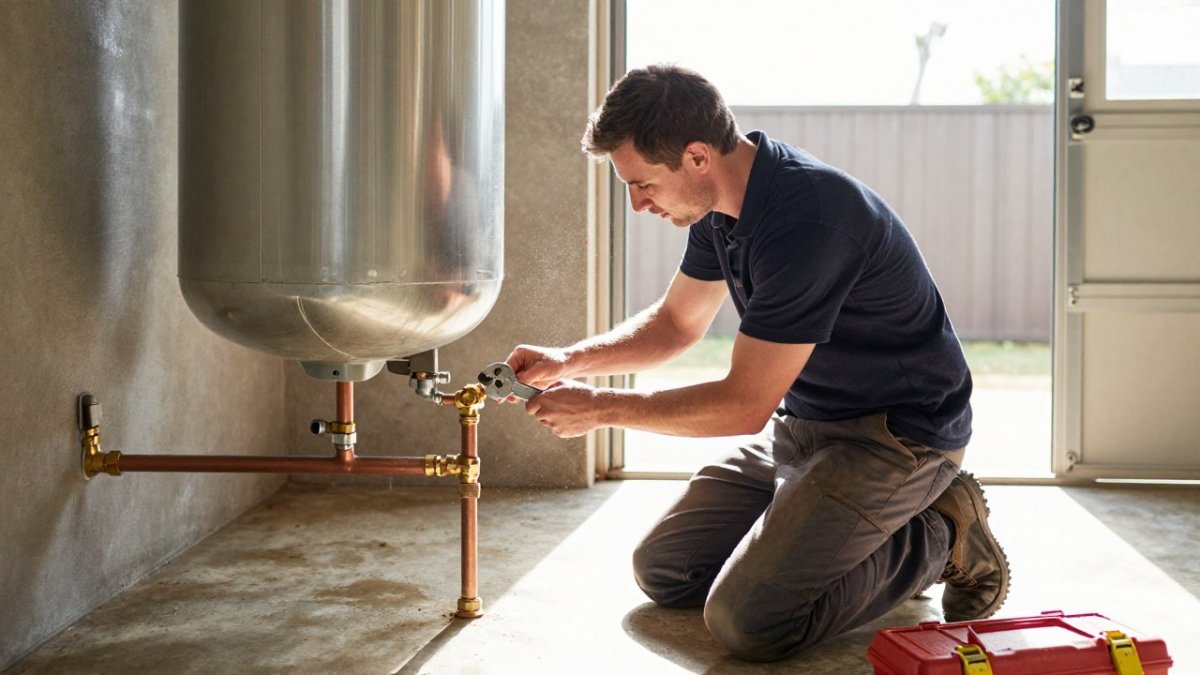
The Hot Water System Installation Process Explained
Last Updated: November 11, 2026
Quick Summary
The hot water system installation process is the sequence a licensed plumber follows: assessment, isolation, removal, site preparation, pipe and service connections, testing, and handover. Hot water system installation work is generally carried out by licensed plumbers under NSW plumbing regulations, with certificates issued on completion.
- An on-site assessment should happen before you commit to any system.
- Isolation of water, power and gas is the first physical step and is not a DIY task.
- Old system removal and disposal should be stated in your quote, not added later.
- A like-for-like electric storage swap is the shortest job; gas, heat pump and solar take longer.
- A proper quote lists the system make and model, capacity, labour, materials and certificates.
Table of Contents
- What the Hot Water System Installation Process Actually Involves
- Hot Water System Installation Checklist Before the Day
- Step 1: Isolating Water, Power and Gas Safely
- Step 2: Removing the Old Unit and Preparing the Site
- Step 3: Connecting Pipes, Electrical and Gas Supply
- Heat Pump Hot Water System Installation: What Changes
- Commissioning, Testing and Handover
- How Long Does Hot Water System Installation Take?
- What a Hot Water System Installation Quote Should Cover
- Booking Your Installation with Northern Rivers Hot Water
- Frequently Asked Questions
What the Hot Water System Installation Process Actually Involves
The hot water system installation process is the sequence of steps a licensed plumber follows to safely remove an old unit and commission a new one: assessment, isolation, removal, site preparation, pipe and service connections, testing, and handover. This guide walks through each stage so you know what is happening on your property and why.
Replacing a failed system is rarely optional. When the tank lets go on a Sunday night, the decision gets made fast, and that is exactly when homeowners get surprised by vague quotes and rushed work. Below, the full process is broken down step by step, including compliance, timelines, and what a proper quote should list.
Northern Rivers Hot Water has been locally owned and operated since 2004, serving the Northern Rivers region of NSW. If you want the wider picture on system types and costs first, our Northern Rivers hot water installation guide covers that ground.
Hot Water System Installation Checklist Before the Day
Most installation problems trace back to poor preparation, not poor workmanship. A short checklist in the week before install day prevents the common delays: wrong system capacity, no clear access, or a gate that nobody mentioned.
- Confirm the new system type and capacity in writing
- Clear a metre of access around the old unit and the path to it
- Note gate widths and any steps for delivery
- Confirm the installer holds a current NSW plumbing licence
- Ask who lodges any rebate paperwork
- Check whether the old unit is being removed and disposed of
- Arrange a plumber's access window, not just a day
Ordering a system before anyone has looked at your switchboard, gas line or roof space is a common cause of a return visit and a revised quote.
Site Assessment and System Selection
An on-site assessment comes first, and it should happen before you commit to anything. The plumber checks household demand (how many bathrooms, how many people), available space, existing pipework, and whether your power supply or gas line can support the new unit.
This is where the real decision gets made. A four-person household with two showers running back to back needs different capacity to a couple in a small unit. If you are weighing options, our comparison of heat pump, gas and electric systems for Northern Rivers homes sets out running costs and trade-offs side by side.
Compliance, Permits and Australian Standards
Hot water installation is governed by plumbing regulations, and work should comply with the applicable Australian Standards covering installation and safety. Hot water installation work is generally carried out by licensed plumbers under NSW plumbing regulations.
What most guides miss is the paperwork trail. Depending on the system and the work involved, your installation may need notification to the local council or a compliance certificate issued on completion. Ask your plumber upfront what certificates you will receive, because you will need them for insurance, resale, or a rebate claim.
Step 1: Isolating Water, Power and Gas Safely
Isolation is the first physical step, and it is not a DIY task. The plumber shuts off the water supply at the isolation valve, then de-energises the electrical circuit at the switchboard or closes the gas supply at the meter or cylinder.
Each service needs its own confirmed isolation before anything is disconnected. Once isolated, the plumber drains the old tank and releases pressure through the pressure relief valve before touching any fittings.
Step 2: Removing the Old Unit and Preparing the Site
Removal follows isolation. The old unit is disconnected, drained, and physically moved out, which is heavier and more awkward work than it sounds, particularly for a full electric storage system on a tight side path.
Site preparation comes next: checking the slab or bracket is sound, clearing the area, and confirming the new unit will sit level with correct clearances. Old system removal and disposal should be stated in your quote, not added later as a surprise line item.
Step 3: Connecting Pipes, Electrical and Gas Supply
Connection is the stage with the most trade overlap. The plumber connects the cold water inlet and hot water outlet, fits the pressure relief valve and temperature control, and then a licensed electrician or gas fitter completes the power supply or gas connection.
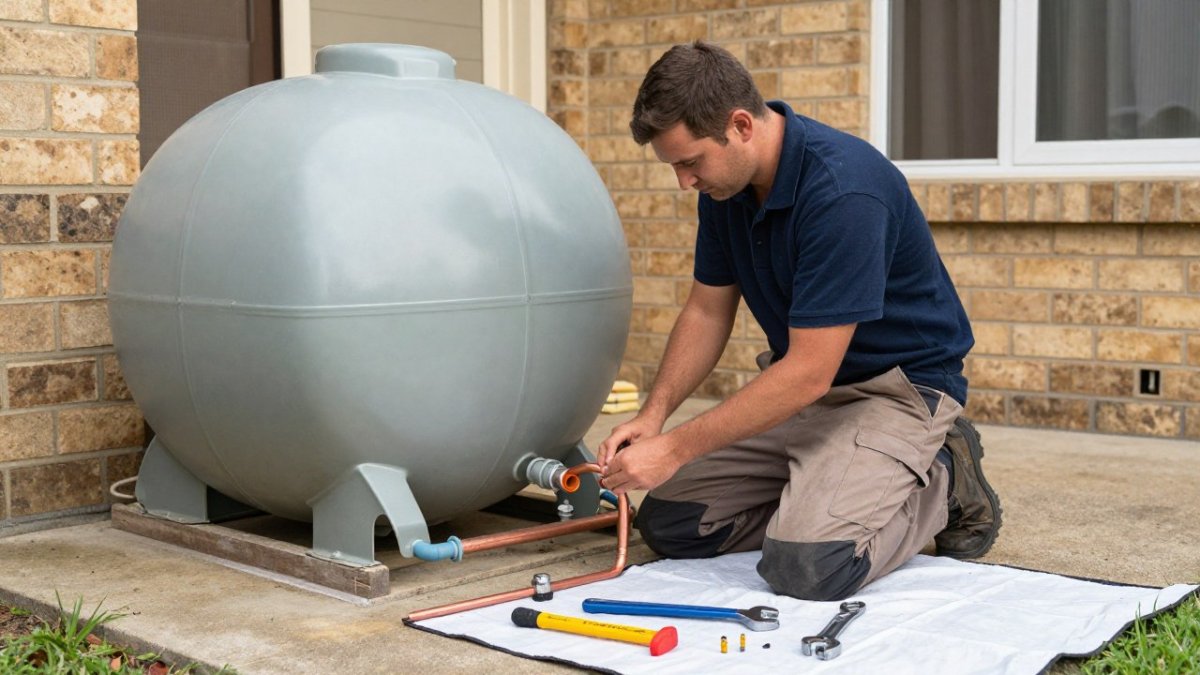
Pipe connections, electrical work and gas work each carry separate licensing requirements in NSW.
Heat Pump Hot Water System Installation: What Changes
The core sequence, assess, isolate, remove, prepare, connect, commission, is the same for every system. What changes is the trade mix, the site requirements and the commissioning checks. Treating installation as one generic process can lead to inaccurate quotes and timelines. Here is how the four common system types differ in practice.
Electric storage
Electric storage is the simplest swap when it is like-for-like: the same footprint, the same cold inlet and hot outlet positions, and an existing dedicated circuit. The variables are the circuit capacity (a larger tank may draw more current and require a circuit upgrade), the pressure and tempering requirements , and the physical weight of a full tank on the slab or bracket.
Gas storage and continuous flow
Gas work adds a licensed gas fitter to the job and a gas compliance certificate to the handover pack. For storage systems, the flue position and clearance to windows, doors and boundaries matter, and the gas line must be sized for the unit's input. For continuous flow units, the key variables are gas line sizing (a larger unit may need a bigger supply line), water pressure and flow rate, and condensate drainage for high-efficiency models. Relocating a continuous flow unit to an external wall adds pipework and flue work, which can extend timelines.
Heat pump
Heat pumps add two requirements to the standard process: positioning for airflow and condensate drainage. The unit draws warmth from the surrounding air, so it needs clear space around the evaporator and a drain path for the condensation it produces. The electrical connection matters more here too, because heat pumps run a compressor and often need a dedicated circuit. Defrost cycles and cold-climate performance vary by model, so the installer should confirm the unit is rated for the local climate zone. If you are still deciding whether one suits your home, our explanation of what a heat pump hot water system is and how it works covers the basics before you commit.
Solar
Solar hot water adds roof work and, for split systems, a pump and controller. The installation variables are roof orientation and pitch, structural fixing, cyclone and wind-load requirements in the applicable building code, freeze protection for frost-prone areas, and the electrical connection for the pump and booster. A solar installation can involve a plumber, a roofer or licensed installer for the roof work, and an electrician, and may require a building approval depending on local council rules.
What this means for your quote and timeline
The system type determines the trade mix, the certificates you receive and the realistic duration. A like-for-like electric storage swap is the shortest job; a gas continuous flow relocation, a heat pump with a new circuit, or a solar split system are the longest. When you compare quotes, check that the scope names the system type, the trades involved and the certificates included, a quote that treats every job as the same is a quote that has not looked at your site.
Commissioning, Testing and Handover
Commissioning is where a good installer separates from a rushed one. The new unit gets filled, the system is flushed, air is bled from the lines, and every connection is checked for leaks under pressure.
Then comes testing: verifying temperature control, confirming the pressure relief valve operates correctly, and running a leak check on the hot water outlet and cold water inlet. Handover should include a walkthrough, the compliance certificate, warranty documents, and basic maintenance advice such as checking the relief valve. Ask for all of it in writing before the plumber leaves.
How Long Does Hot Water System Installation Take?
A system change such as switching from electric storage to a heat pump can run longer because of new pipework, drainage and electrical work. Access, distance from the meter, and weather all affect the day.
Here is how the stages usually break down:
| Stage | Typical Duration | What Affects It |
|---|---|---|
| Assessment and isolation | 30-60 minutes | Number of services to isolate |
| Old unit removal | 1-2 hours | Weight, access, stairs |
| Site preparation | 30-60 minutes | Slab condition, clearances |
| Pipe and service connections | 1-3 hours | Pipework changes, electrical or gas work |
| Commissioning and handover | 30-60 minutes | System type, testing requirements |
A change of system type is better planned with a buffer in the schedule.
What a Hot Water System Installation Quote Should Cover
A proper quote lists the system make and model, capacity, labour, materials, old unit disposal, and any compliance certificates, in writing, before work starts. If a quote is a single number with no breakdown, ask for the detail.
Watch out: the classic surprise charge comes from work that was always going to be needed but was never scoped, such as upgrading a circuit or replacing corroded pipework. Ask directly: "What could add cost on the day, and what would trigger it?" A firm answer is a good sign. If you are in the Northern Rivers region, you can request a quote for hot water work and get the scope in writing.
Booking Your Installation with Northern Rivers Hot Water
Book with a licensed local installer who scopes the job before quoting. Northern Rivers Hot Water has been locally owned and operated since 2004 and holds NSW Plumbing Licence 230095C. The business handles gas, electric and heat pump systems, and provides a quote before work begins. Same-day emergency response is available. You can see the full range of gas, electric and heat pump services across the region before you call.
No hot water is a problem that gets worse with waiting. If your system has failed or is on its last legs, get a licensed plumber to assess it before it lets go completely. Get started with Northern Rivers Hot Water and book a same-day installation or repair with upfront pricing before work begins.
Frequently Asked Questions
Do I need a licensed plumber to install a hot water system in NSW?
Yes. In New South Wales, hot water system installation is regulated plumbing work and must be carried out by a licensed plumber. Electrical connections also require a licensed electrician, and gas work requires a licensed gas fitter. A qualified installer will issue compliance documentation and ensure the system meets Australian Standards, including correct pressure relief valve and temperature control setup. Always ask for the licence number before booking.
Can I use hot water while the new system is being installed?
No. The water supply is isolated during the swap, so hot water is unavailable for the duration of the job. For a straightforward replacement that is usually a few hours, so running a shower beforehand or boiling a kettle covers most households. If the installation is more complex, such as relocating the unit or upgrading pipework, ask your plumber for a realistic window so you can plan around it.
What happens to the old hot water system after replacement?
The old unit is disconnected, drained and removed from site, and most installers include disposal in the quote. Tanks are bulky and heavy, so removal often needs two people and a trolley, and access matters on tight blocks. Ask upfront whether old-unit disposal and recycling are included, because some quotes list removal as an extra. Confirm this before the day so there are no surprise charges.
How is a new hot water system tested after installation?
Testing and commissioning happen before handover. The installer fills the tank, flushes the system to clear air and debris, then checks every pipe connection for leaks. They confirm the pressure relief valve and temperature control are working, test the power or gas supply, and run a hot water outlet to verify flow and temperature. A handover walkthrough covering settings, warranty details and basic maintenance is a reasonable thing to ask for.
What should I ask a plumber before accepting an installation quote?
Ask whether the quote includes removal and disposal of the old unit, all pipework and fittings, electrical or gas connections, and compliance certificates. Confirm the licence number and insurance, and check whether the price is fixed or subject to site conditions. Also ask about warranty terms on both the unit and the labour, expected timeframe, and whether they handle rebate paperwork for heat pump or solar upgrades.
Can a heat pump hot water system be installed on an existing electric system's footprint?
Often yes, but it depends on the site. Heat pumps need adequate clearance for airflow, a suitable base, and condensate drainage, so the old electric tank's position may not suit without adjustment. Some installations also need a switchboard check or a dedicated circuit. A site assessment confirms whether a straight swap is possible or whether minor plumbing and electrical changes are needed before the install day.

Need help with your hot water system?
Call Northern Rivers Hot Water for a free, no-obligation quote. We service Lismore, Ballina, Byron Bay, Casino and all surrounding areas.
0472 580 441