
7 Steps to Flush Sediment From an Electric Hot Water Tank
Last Updated: November 10, 2026
Quick Summary
To flush sediment from an electric hot water tank, switch off the power at the circuit breaker, close the cold-water inlet valve, and open a hot tap to relieve pressure. Then connect a hose to the drain valve at the base and let the tank empty completely, briefly pulsing the cold inlet until the water runs clear. Refill the tank fully before restoring power so the heating element doesn't dry-fire.
- Rumbling or popping noises when the system heats up are a sign of sediment buildup.
- Flush a hot water tank once a year, and more often in homes on hard water.
- Leave a hot tap open for the whole job to stop the tank pulling a vacuum while it drains.
- Never use compressed air or a high-pressure jet on a domestic drain valve.
- Wait until flow at the hot tap is steady for two to three minutes before switching the breaker back on.
Table of Contents
- Signs of Sediment in a Hot Water Tank
- Safety Checks Before You Flush Sediment
- How to Drain an Electric Hot Water Tank
- How Often to Flush a Hot Water Tank
- Hot Water Tank Drain Valve Blocked: How to Clear It
- Refilling and Restoring Power Safely
- Book a Flush or System Check With Northern Rivers Hot Water
- Frequently Asked Questions
Signs of Sediment in a Hot Water Tank
Sediment is a layer of minerals that settles at the bottom of a hot water tank as water is heated. Over time, that layer hardens, insulates the heating elements and reduces how much hot water the tank can hold.
Tanks that have gone years without a flush often show these signs. Here is what to watch for:
- Rumbling or popping noises when the system heats up
- Rusty or cloudy hot water at the tap
- Hot water running out faster than it used to
- Lower water pressure on the hot side only
- Higher power bills with no change in how much hot water you use
The popping sound is the giveaway. It's steam trapped under a crust of mineral deposits, and it puts real strain on the tank.
If you're also noticing weak flow at the taps, our guide on how to fix hot water pressure problems at home walks through the likely causes. And if you're seeing rusty water alongside strange noises, it's worth reading the five signs your hot water system needs replacing before you assume it's only sediment.
Safety Checks Before You Flush Sediment
Before you flush sediment, you must cut the power and the water supply, then release the pressure from the tank. Skipping any of these three steps risks a shock, a scald or a burnt-out heating element.
Here is the order that matters:
- Switch off the power at the circuit breaker
- Close the cold-water inlet valve
- Open a hot tap to relieve pressure
- Let the water cool before draining
Do these in sequence, not all at once. Each step protects the next.
Isolating Power at the Circuit Breaker
Find the breaker marked for the hot water system and switch it to OFF. If the label isn't clear, turn off the main switch instead.
This step is not optional on an electric tank. With the power on, the heating elements will run dry the moment the tank empties, and a dry-fired element fails fast.
Once the breaker is off, test the tank by listening for the thermostat. Silence means the power is truly cut.
Shutting Off the Cold-Water Supply and Relieving Pressure
Close the cold-water inlet valve at the top of the tank, usually a brass tap on the pipe feeding the unit.
Then open a hot tap at a sink or bath. You'll hear air rush in and the flow will splutter. That's the tank depressurising.
Leave the hot tap open for the whole job. It keeps the tank from pulling a vacuum while it drains.
How to Drain an Electric Hot Water Tank
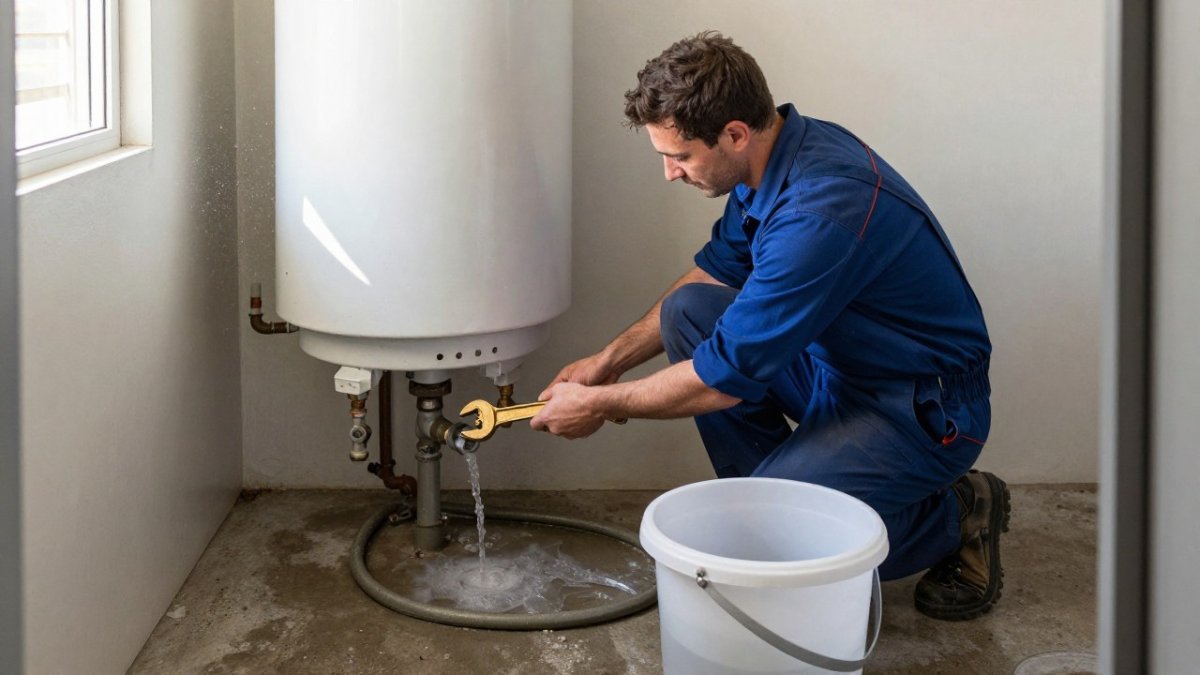
To drain an electric hot water tank, connect a garden hose to the drain valve at the base, run the other end to a floor drain or garden, and open the valve. Gravity does the rest.
Full steps:
- Screw the hose onto the drain valve, hand-tight only
- Run the hose to a floor drain, outdoor gully or garden bed
- Open the drain valve
- Let the tank empty completely
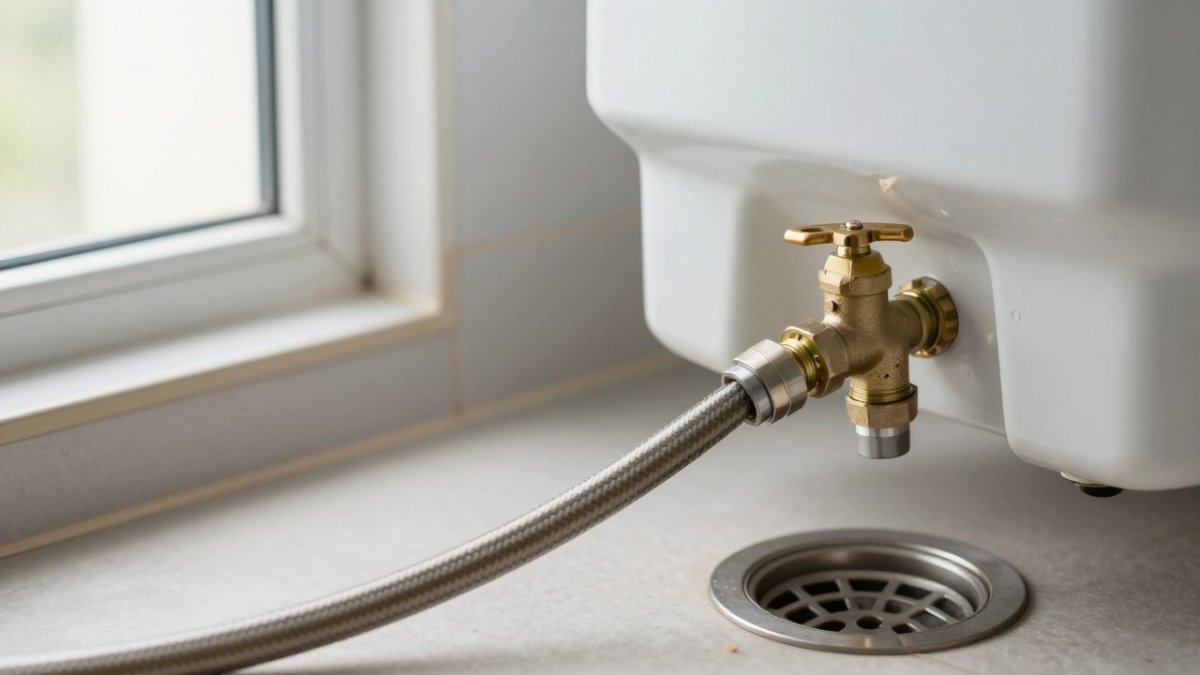
The water comes out hot at first. Let it cool in the hose before it hits lawn or plants.
Once the flow stops, briefly open the cold-water inlet for a few seconds. That stirs up the sediment at the bottom and pushes it out the hose. Close it again and repeat until the water runs clear.
Here is the drain sequence at a glance.
| Step | What to do | Note |
|---|---|---|
| 1 | Screw hose onto drain valve | Hand-tight only |
| 2 | Run hose to floor drain, gully or garden | Water comes out hot at first |
| 3 | Open the drain valve | Gravity does the rest |
| 4 | Let the tank empty completely | Wait until flow stops |
| 5 | Briefly open cold inlet, then close | Repeat until water runs clear |
How Often to Flush a Hot Water Tank
Flush a hot water tank once a year. That's the maintenance schedule most manufacturers recommend to stop sediment buildup and keep the system running properly, according to Rheem's maintenance guidance.
Homes on hard water may need it more often. If you're seeing scale on your taps and kettle, the tank is collecting it too.
A few things can shift how often a tank needs attention, including your water type and the age of the unit.
Hot Water Tank Drain Valve Blocked: How to Clear It
A blocked drain valve is common on tanks that haven't been flushed in years. Sediment packs into the valve and the water barely trickles out, if it comes out at all. On an electric tank, the risk is higher because the element sits close to the bottom where the crust forms.
Work through these steps in order, and stop as soon as the flow improves:
- Check the valve is fully open. Some brass drain valves have a quarter-turn dead zone where the first movement feels stuck. Turn the handle firmly but smoothly through its full travel before assuming it is blocked.
- Poke the outlet. With the valve open and the hose removed, push a stiff wire or a thin screwdriver into the outlet to break up the crust. Have a bucket ready, the release can be sudden.
- Use short inlet bursts. Close the drain valve, open the cold-water inlet for five to ten seconds, then close it and reopen the drain valve. The pressure pulse often shifts a soft plug of sediment. Repeat two or three times.
- Try a sediment buster. This is a small tool that threads onto the valve and clears heavy mineral buildup, a method often recommended by trade educators like See Jane Drill. Follow the tool instructions and do not over-tighten.
Watch out: never use compressed air or a high-pressure jet on a domestic drain valve. The valve body and the tank fitting are not rated for it, and a fitting that lets go under pressure floods the room fast.
If the valve still won't flow after these steps, stop. A valve that breaks off under pressure is a genuine emergency. Close the cold-water inlet, leave a hot tap open to relieve pressure, and call a licensed plumber for hot water repair and fault diagnosis.
One more electric-specific check: if the tank has been draining slowly for a long time, the lower element may already have been dry-fired during a previous refill. If you notice a burnt smell or the breaker trips after refilling, switch the breaker off and have the element tested before using the tank again.
Refilling and Restoring Power Safely
Refill the tank fully before you restore power. This is the step that saves heating elements, and it's the one most DIY guides skip. On an electric tank, a dry-fired element can fail within minutes, and the repair is far more expensive than the flush itself.
Here's the sequence:
- Close the drain valve firmly by hand, do not over-tighten with a tool.
- Remove the hose, or leave it connected and coiled above the tank if it is clean.
- Open the cold-water inlet valve fully.
- Open a hot tap at the highest fixture in the house and let it run.
- Wait until the flow is steady with no spluttering or gurgling.
- Keep the tap running for another two to three minutes once flow is steady.
- Only then switch the breaker back on.
Steady flow at the hot tap with no air pockets means the tank is full. If you hear gurgling or the flow spits, air is still in the tank, keep waiting.
Watch out: switching the power on with a partly filled tank will burn out the element within minutes. If you are unsure whether the tank is full, leave the power off and wait longer, there is no cost to waiting, and a replacement element is a booked repair.
Once the power is back, check for leaks around the drain valve and inlet. Then let the tank heat and test the temperature at the tap. If the breaker trips or you smell burning, switch it off immediately and have the element and thermostat checked by a licensed plumber.
If the tank has been empty for more than a day, or the drain valve was blocked and cleared during the job, consider having the anode rod inspected at the same time. Sediment and dry-firing both shorten anode life, and a cheap rod replacement now can add years to the tank.
Book a Flush or System Check With Northern Rivers Hot Water
Flushing a tank is a job most handy homeowners can manage. But if your valve is seized, your tank is old, or you'd rather not risk a dry-fired element, we can take it from here.
Our licensed plumbers serve the Northern Rivers region. We've been locally owned since 2004 and hold NSW Plumbing Licence 230095C.
We offer same-day emergency response, no call-out fee for quotes, and transparent upfront pricing. We also handle major brands, including Rinnai, Rheem and Dux.
You can book an electric storage hot water service, or if you're not sure what's wrong, book a hot water service online and we'll diagnose it on site.
If your hot water is lukewarm, noisy or running out too fast, don't wait for it to fail completely. Northern Rivers Hot Water can flush, service or repair your system, with same-day response for urgent jobs, no call-out fee for quotes and upfront pricing before work begins. Get started with Northern Rivers Hot Water and get your hot water back to normal.
Frequently Asked Questions
Should you turn off the power before draining an electric hot water tank?
Yes, always. Switch off the electric water heater at the circuit breaker before you drain anything. If the tank empties while the power is still on, the heating elements will run dry and burn out within seconds, which is a costly repair. Once the tank is drained, refilled completely and free of air, you can restore power at the breaker. Confirm water flows steadily from a hot tap before you switch it back on.
How can you tell if sediment has built up in a hot water tank?
Common signs of sediment in a hot water tank include rumbling, popping or cracking noises as the tank heats, rusty or cloudy water, lower hot water pressure and hot water running out faster than it used to. These symptoms point to mineral deposits insulating the heating elements and reducing tank capacity. If you notice several of them at once, a flush is usually the first step before considering a repair or replacement.
What should you do if the hot water tank drain valve is blocked?
A hot water tank drain valve blocked by heavy sediment will trickle or stop flowing entirely. Try opening the valve fully and probing gently with a thin wire, then consider a sediment buster tool to break up the mineral crust. Never force the valve with a lever, as you can snap the stem and cause a leak. If it stays blocked, call a licensed plumber rather than risk damaging the tank.
When should you call a plumber to flush an electric hot water tank?
Call a plumber if the drain valve won't clear, if the tank is old and has never been flushed, or if you see leaks around the valve or fittings. Older tanks with heavy sediment can develop leaks once disturbed, and a professional can check the anode, elements and pressure relief valve at the same time. Northern Rivers Hot Water offers same-day emergency response and no call-out fee for quotes.

Need help with your hot water system?
Call Northern Rivers Hot Water for a free, no-obligation quote. We service Lismore, Ballina, Byron Bay, Casino and all surrounding areas.
0472 580 441