

What Does an Electric Hot Water System Cost to Run?
Last Updated: November 19, 2026
Quick Summary
The running cost of an electric hot water system depends on your tariff, household size and hot water use, rather than one fixed figure. Daily cost is the energy the system uses multiplied by your kilowatt hour rate, and an off-peak controlled load tariff often lowers that rate.
- Running cost depends on the energy the element uses, your kilowatt hour price, heating frequency and tank insulation.
- Estimate daily cost by multiplying the energy used per day by your rate, then by 30 for monthly.
- Off-peak controlled load rates are usually lower, though the gap varies by retailer and region.
- A 125-litre tank suits one or two people, while a family of four or five typically needs 250 to 315 litres.
- A heat pump generally uses less electricity than a comparable electric element system, with the saving depending on model and climate.
Table of Contents
- How Electric Hot Water Running Costs Are Calculated
- Electric Hot Water System Cost Per Day and Per Month
- Off-Peak Electric Hot Water Costs Compared With Standard Tariffs
- Heat Pump Hot Water Running Costs and When Switching Pays Off
- Frequently Asked Questions
How Electric Hot Water Running Costs Are Calculated
Most Northern Rivers homeowners want one answer: how much does it cost to run an electric hot water system? The honest answer depends on your tariff, household size and hot water use.
Running cost is driven by four things: the energy the element uses, your price per kilowatt hour, how often the system heats water, and tank insulation. Your bill shows your rate; system size (usually 125 to 400 litres) sets how much water must be reheated daily.
Watch out: a faulty thermostat or a heavily scaled element can push running costs up without any obvious sign, so a sudden jump in your bill is worth checking.
Electric Hot Water System Cost Per Day and Per Month
Daily running cost is the energy used each day multiplied by your power price. An electric system uses energy only when it reheats water, so the daily figure swings with how much you draw from the tank.
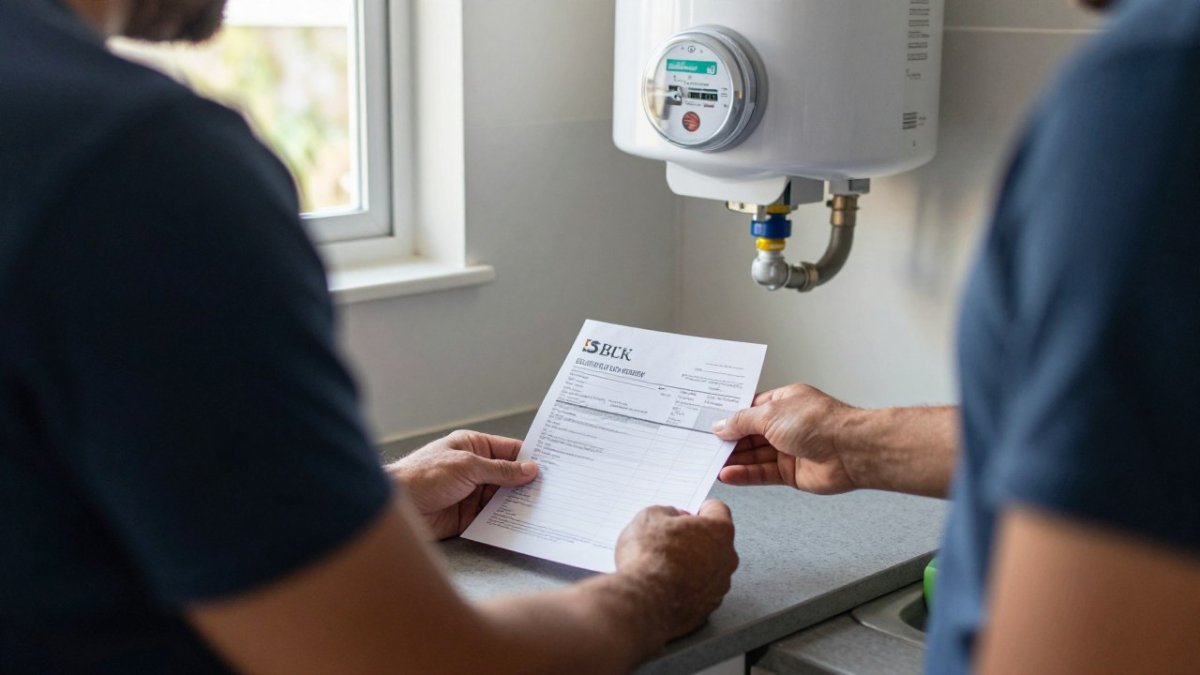
To estimate your own figure, check the kilowatt hour rate on your bill and how much power the system uses per day (the energy rating label gives a starting point). Multiply the two for a daily cost, then by 30 for a monthly estimate.
You can also track real use over a month by comparing your bill with and without the system's heating running, if your supplier and meter allow. Our Hot Water Costs page covers current benchmarks:
check current hot water cost benchmarks
Off-Peak Electric Hot Water Costs Compared With Standard Tariffs
Many electric storage systems in the Northern Rivers run on a controlled load or off-peak circuit. The retailer or distributor switches the element on during set overnight windows, commonly around 10pm to 7am, depending on your distributor and tariff, at a lower rate per kilowatt hour. Because the tank reheats overnight and stores hot water for daytime use, a timer-controlled system often costs less than one heating whenever the thermostat calls.
The trade-off is storage: an off-peak system must fit a full day of demand into the tank overnight. A 125-litre tank suits one or two people; a family of four or five typically needs 250 to 315 litres, and larger households may need 400 litres or a daytime boost. An undersized tank or short timer window means cold water by evening, and the fix, a bigger tank or a tariff allowing a daytime boost, changes the running-cost maths.
To compare tariffs on your own bill, take the controlled load rate and the standard or anytime rate. The controlled load rate is usually noticeably lower, but the gap varies by retailer and region, so use the rates on your most recent bill. Then estimate daily energy use from the energy rating label or element size, a 3.6 kW element running about two hours draws roughly 7 kWh, and multiply by each rate for a like-for-like daily comparison.
Watch out: a controlled load circuit that is incorrectly wired, or a timer set to the wrong window, can leave the tank reheating on the standard tariff without any obvious sign, so a jump in your bill is worth checking against the tariff schedule.
Ask your retailer three things before relying on off-peak savings: whether the property already has a controlled load tariff, the current off-peak rate and time window, and whether a daytime boost is available if the tank runs short. Rates and windows change, so confirm them on your bill or with your retailer.
The table below sums up the key figures and checks for off-peak electric hot water costs, using only what the article states.
| Item | Value | Note |
|---|---|---|
| Typical off-peak window | Around 10pm to 7am | Varies by distributor and tariff |
| Single-person or couple tank | 125 litres | Suits one or two people |
| Family of four or five | 250 to 315 litres | Typical sizing for larger households |
| Very large households | 400 litres | Or a daytime boost |
| Example element | 3.6 kW | Running about two hours draws roughly 7 kWh |
| Controlled load rate | Usually lower | Gap varies by retailer and region |
| Misconfigured timer or wiring | Reheats on standard tariff | Check bill against tariff schedule |
Off-peak tank size by household size
Heat Pump Hot Water Running Costs and When Switching Pays Off
A heat pump doesn't generate heat with an element like a standard electric storage system. It uses a refrigerant cycle and fan to move heat from the surrounding air into the water, drawing far less electricity for the same hot water. A heat pump generally uses less electricity than a comparable electric element system, with the saving depending on model, climate and installation. A unit sited in a cold, shaded or poorly ventilated spot runs less efficiently.
The comparison is straightforward once you have the numbers. Take your current electric system's daily energy use, apply your kilowatt hour rate, then apply the same rate to the heat pump's lower daily energy use. The difference, multiplied across a year, is the running-cost saving, set against the heat pump's higher upfront price, less any rebate.
Switching usually pays off when the current system is near the end of its working life, bills are high and hot water use is heavy, or a rebate shortens the payback period. It pays off less clearly when the existing system is relatively new, hot water use is low, or site constraints, space, drainage, noise, ventilation, make installation expensive.
Before committing, check three things. First, whether a rebate applies; rules and eligibility change, so confirm current details with the relevant program. Second, whether the installation needs a licensed plumber or electrician, electrical work on a hot water circuit and plumbing work should be carried out by appropriately licensed tradespeople. Third, how the old unit will be disposed of or recycled, often arranged through the installer.
Our team can work out the numbers for your home and advise whether a heat pump suits your household. see heat pump hot water rebates in the Northern Rivers before you decide, and learn how a heat pump hot water system works before comparing options. You can also see our electric heat pump installation options. If your current tank is nearing the end of its working life, find out how long a hot water system should last before committing to a repair or replacement.
For pricing on any replacement, Northern Rivers Hot Water can give you a quote. Costs vary with system size, site access and installation needs, so get an itemised quote before deciding.
Frequently Asked Questions
How much does it cost to run an electric hot water system per day in Australia?
Running cost depends on the system's daily energy use and your electricity tariff. Off-peak tariffs can bring this down noticeably. Your actual figure depends on tank size, the thermostat setting, how much hot water your household uses and your electricity plan. Check your energy bill for your exact rate and multiply it by the daily kWh your system draws.
Is a heat pump cheaper to run than an electric hot water system?
Yes, in most cases. A heat pump hot water system uses electricity to move heat from the surrounding air into the water rather than generating all of the heat directly. This generally means it uses less electricity than a standard electric element for the same hot water. Running costs drop accordingly, though the upfront price is higher. Eligible heat pump installations may also qualify for rebates, which can shorten the payback period. Get a written quote to compare your specific situation.
How can I reduce the running costs of my electric hot water system?
Set the thermostat to a sensible temperature and avoid setting it higher than needed. Fix any dripping taps, since a constant drip wastes heated water. Use cold water for washing where possible, and schedule heating on an off-peak tariff if your meter supports it. Insulating the tank and first metres of pipe also reduces heat loss. If the system is old or inefficient, a service check can confirm whether it still performs as expected or needs replacing.

Need help with your hot water system?
Call Northern Rivers Hot Water for a free, no-obligation quote. We service Lismore, Ballina, Byron Bay, Casino and all surrounding areas.
0472 580 441