
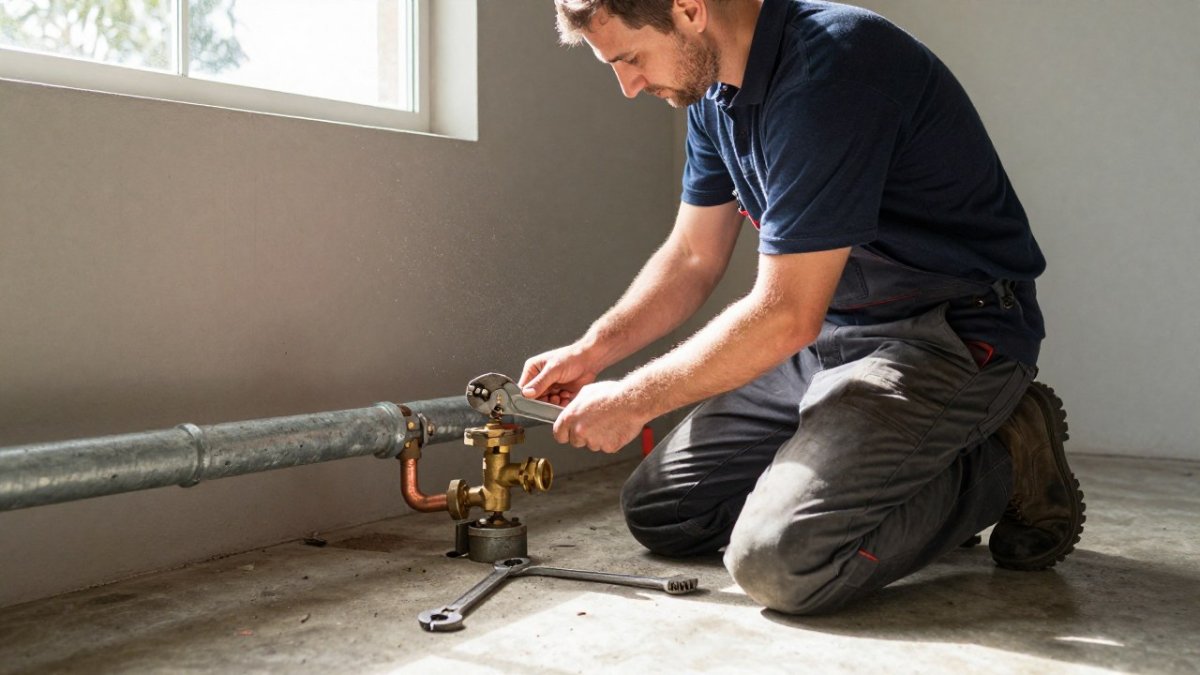
5 Signs Your Hot Water System Needs Replacing
Quick Summary
Most hot water systems last about 8 to 12 years for electric or gas tank models, and about 10 to 15 years for continuous-flow or heat pump units. Water quality and maintenance can shorten these ranges, so budget for replacement once a tank is past about eight years and showing rust, leaks or repeated repairs.
- Electric and gas tank systems typically last about 8 to 12 years.
- Continuous-flow and heat pump systems typically last about 10 to 15 years.
- Hard or corrosive water and skipped maintenance shorten a system's life.
- Rusty water, leaks, noises and rising bills are key warning signs.
- A leaking or rusting tank is almost never worth repairing.
Table of Contents
- How Long a Hot Water System Lasts
- Warning Signs a Hot Water System Needs Replacing
- Deciding Whether to Repair or Replace Your Hot Water System
- Maintaining Your Hot Water System to Extend Its Life
- Frequently Asked Questions
How Often Should a Hot Water System Be Replaced?
Last Updated: November 19, 2026
Most hot water systems show warning signs well before a tank bursts.
How Long a Hot Water System Lasts
Most hot water systems don't fail on a fixed birthday, but these typical service lives are a useful planning guide under normal household use, not guarantees.
| System type | Typical service life | What usually ends its life first |
|---|---|---|
| Electric storage (tank) | About 8-12 years | Tank corrosion and leaks at the base or seams |
| Gas storage (tank) | About 8-12 years | Tank corrosion, then burner or valve faults |
| Continuous-flow (instantaneous) | About 10-15 years | Heat exchanger scale, then electronic controls |
| Heat pump | About 10-15 years | Compressor and refrigerant circuit, then fan and controls |
| Solar (with electric or gas boost) | About 15-20 years for collectors; 8-12 years for the tank | Collector degradation and the booster/tank ageing separately |
Two things shorten those ranges most: water quality (hard water scales heat exchangers and tanks; corrosive water attacks tank linings) and maintenance, an unchecked anode, unexercised pressure relief valve and unflushed sediment quietly cost you years.
Location matters too. Local conditions also matter: systems age differently from property to property depending on water source and climate, and hard or corrosive water tends to shorten tank and heat-exchanger life. Once a tank is past about eight years with rust, weeping seams or repeated repairs, start budgeting for replacement rather than waiting for it to burst.
Unsure which category your system falls into? The model and serial plate tells a licensed plumber its type and manufacture date, the fastest way to turn a vague "it's getting old" into a real replacement timeline. If you're considering a alternative to an old unit, what a heat pump hot water system is and how it works explains how that technology differs.
Typical service life of hot water systems by type
Warning Signs a Hot Water System Needs Replacing
Watch for these five common signs that your system is failing:
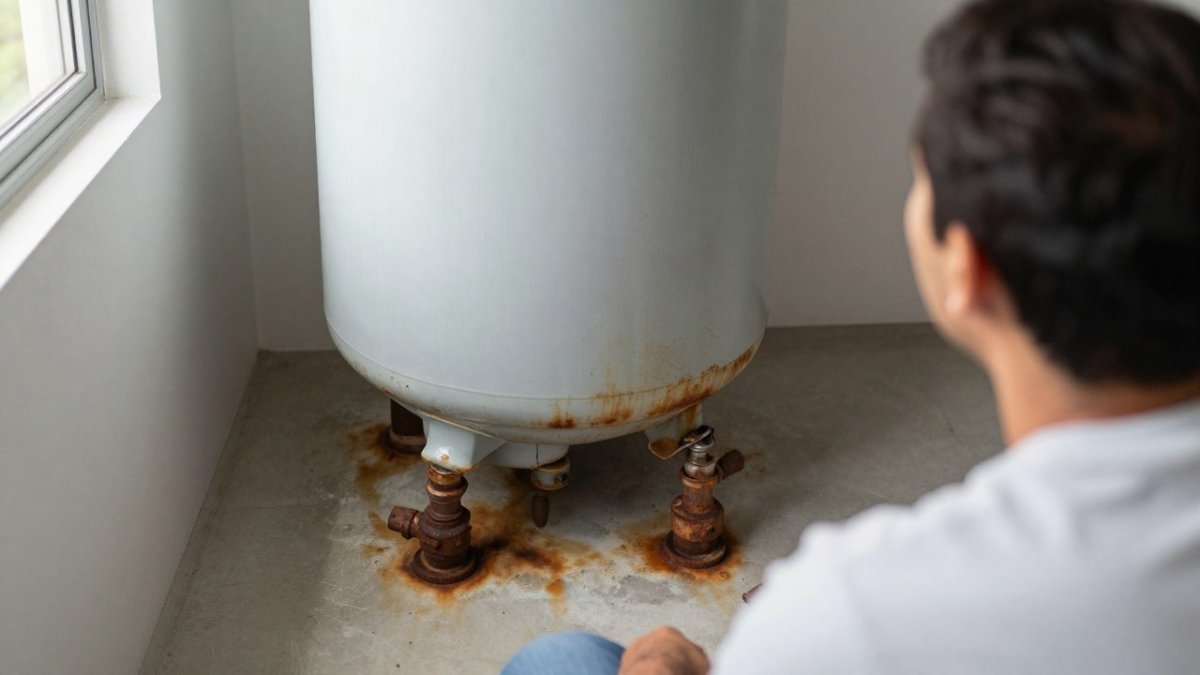
- Rusty or discoloured water. Rust in the hot water often points to a corroding tank.
- Leaks or water pooling around the unit. A leaking tank usually cannot be fixed.
- Unusual noises. Popping or rumbling often means sediment has built up inside the tank.
- Inconsistent or insufficient hot water. Lukewarm water or a quick run-out can signal a failing element or tank.
- Rising energy bills. An older system that works harder can push up your power or gas costs.
If you see any of these signs, arrange a professional inspection soon. The five-sign breakdown explains each warning in more detail and when to call a local plumber. Leaks in particular can cause water damage quickly.
Deciding Whether to Repair or Replace Your Hot Water System
1. Is the tank itself sound? A leaking or rusting tank is almost never worth repairing, the corrosion is inside the steel, and patching only buys time. If the fault is an element, thermostat, valve, fan or control board and the tank is dry and rust-free, repair is usually the sensible first move.
2. How old is it relative to its expected life? A repair well inside the lifespan ranges above is usually good value; one near or past them is money spent on borrowed time, especially if it's the second or third fault in as many years.
3. What is the repair cost as a share of replacement? If a repair approaches roughly half the cost of a comparable new system, or repairs are recurring, replacement usually wins on whole-of-life value. Get both quoted in writing so you compare like with like.
4. Will a new system change your running costs? Older electric storage units are often the least efficient option in the house. A heat pump, continuous-flow unit or well-sized solar system can cut running costs over the unit's life, and may be eligible for government energy-efficiency incentives, check current federal and state programs, as eligibility and amounts change. Factor those savings in, not just the sticker price.
The decision path: tank leaking or rusting → replace; tank sound but system near end of life and fault is major → replace; tank sound, system mid-life, fault is a single inexpensive part → repair; tank sound but faults recurring → replace. If you're on the fence, ask for a written assessment stating the fault, repair cost, system age and expected remaining life. A professional fault diagnosis from licensed plumbers can give you that assessment before you commit to a new system.
Watch out: a leaking tank can release a lot of water quickly and damage floors, ceilings and electrical fittings. If you see a leak, isolate the water supply to the unit if safe and call a licensed plumber, do not attempt to repair a pressurised tank yourself. Any electrical work, including elements, thermostats and heat pump controls, must be done by a licensed electrician, and replacement or major work by a licensed plumber in line with Australian plumbing requirements. Old units also need responsible disposal or recycling rather than the nature strip, so ask your installer what happens to the old system.
Our team at Northern Rivers Hot Water can diagnose the fault and talk through both options. You can compare replacement options across the Northern Rivers, including same-day replacement and free quotes. Pricing depends on system type, location and work required, so ask for a quote before the job starts.
Maintaining Your Hot Water System to Extend Its Life
- Have the system serviced by a licensed plumber once a year
- Flush the tank to remove sediment, as your plumber advises
- Check the pressure relief valve and look for drips
- Keep the area around the unit clear and dry
A yearly service is one of the easiest ways to spot wear early. Read more about book a hot water service with a licensed plumber across the Northern Rivers.
Hot water systems rarely last forever, so keep an eye on the warning signs above. If your system is leaking, rusting or giving you trouble, call Northern Rivers Hot Water for a clear diagnosis and an honest recommendation. Get in touch with our licensed team to find out whether your system can be repaired or whether it is time to replace it.
Frequently Asked Questions
How often should a hot water system be replaced?
Most storage hot water systems last roughly 8 to 12 years, and many tankless or continuous-flow units can last longer when they are serviced regularly. Age alone is not the only factor. Water quality, how much hot water your household uses, and how well the system has been maintained all affect its lifespan. If your system is approaching the 10-year mark and is showing wear, it is worth getting a professional assessment and a replacement quote from Northern Rivers Hot Water so you can plan the change rather than wait for a failure.
Is a leaking hot water system always due for replacement?
Not always. A small leak at a fitting, valve or pipe connection can often be repaired, such as by replacing a pressure relief valve or tightening a connection. A leak from the bottom or side of the tank usually means the tank itself has corroded and failed, and in that case replacement is the safer option. Turn off the water supply and power or gas to the unit, then have a licensed plumber inspect it before deciding. Northern Rivers Hot Water can diagnose the source of the leak and explain whether repair or replacement makes more sense for your system.
Should I repair or replace my hot water system?
Repair is usually worthwhile when the system is relatively young, the fault is isolated, such as a faulty element or valve, and the repair cost is a small fraction of the price of a new unit. Replacement tends to make more sense when the system is near or past its expected lifespan, the tank is leaking or rusting, or repairs are becoming frequent. Replacing an older electric system with a more energy-efficient model, such as a heat pump, can also lower running costs over time. Ask for an upfront quote before any work begins so you can compare both options clearly.

Need help with your hot water system?
Call Northern Rivers Hot Water for a free, no-obligation quote. We service Lismore, Ballina, Byron Bay, Casino and all surrounding areas.
0472 580 441