
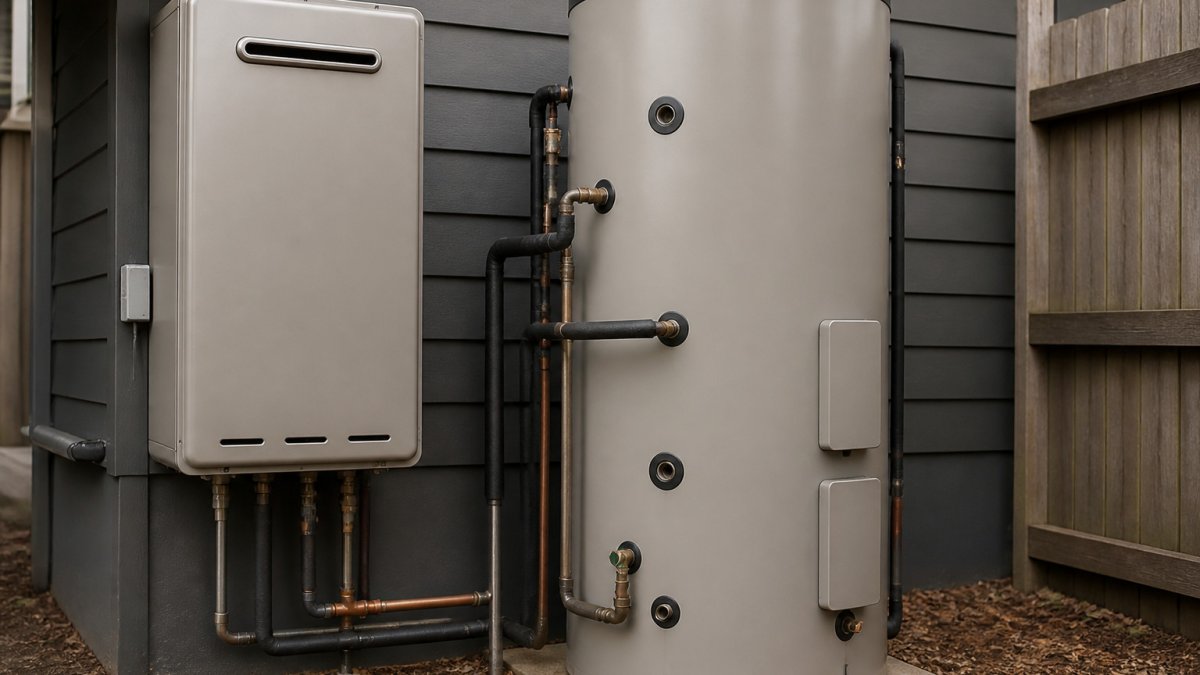
Rinnai vs Rheem Hot Water System Comparison
Quick Summary
Rinnai vs Rheem depends mainly on the system type you need, since Rinnai is best known for gas continuous-flow units while Rheem covers gas storage, electric storage and heat pump models. Start by matching your fuel, whether mains gas, electricity only or LPG, then compare sizing, running costs and warranty for the specific models you are considering.
- Rinnai is best known for gas continuous-flow units that heat water on demand.
- Rheem covers gas storage, electric storage and heat pump models.
- Size a unit for your busiest hour, not your average day.
- Check flow rate at your actual incoming water temperature, not brochure conditions.
- Total cost of ownership should include servicing and replacement, not just purchase price.
Table of Contents
- How Rinnai and Rheem Differ in Range and System Type
- Rinnai vs Rheem Gas Hot Water System: Performance and Hot-Water Delivery
- Rinnai vs Rheem Heat Pump Hot Water: Efficiency and Rebate Eligibility
- Rheem vs Rinnai Running Costs and Total Cost of Ownership
- Warranty Coverage, Reliability and Expected Lifespan
- Hot Water System Replacement Cost and What Affects the Price
- Installation Suitability for Northern Rivers Homes
- Booking a Hot Water Assessment for Your Home
- Frequently Asked Questions
How Rinnai and Rheem Differ in Range and System Type
Last Updated: November 4, 2026
Choosing between Rinnai and Rheem usually comes down to the type of system you need. Both brands offer gas continuous-flow units, electric storage tanks and heat pump systems, but their strengths sit in different places. Knowing which category fits your home narrows the decision faster than comparing brand names alone.
Rinnai is best known for gas continuous-flow units, which heat water on demand rather than storing it in a tank. Rheem covers a broad range that includes gas storage, electric storage and heat pump models. This means a like-for-like comparison only makes sense once you have settled on a system type.
Start with the fuel you have. If your home is connected to mains gas, a continuous-flow unit is worth considering. If you are on electricity only, you are looking at electric storage or a heat pump. Homes running LPG need a model rated for LPG, and not every plumber services those units with the same confidence.
Rinnai vs Rheem Gas Hot Water System: Performance and Hot-Water Delivery
A continuous-flow gas system heats water as it passes through the unit, so it never runs out in the way a storage tank can. The practical question is whether the unit can supply enough hot water when two outlets run at once, such as a shower and a kitchen tap.
The number that answers that question is the unit's flow rate in litres per minute, read against the temperature rise it must achieve. Temperature rise is the difference between your incoming cold-water temperature and the delivery temperature you want. A unit rated at a given flow rate is rated at a specific rise, often around 25°C, and the achievable flow drops as the required rise increases.
Sizing is therefore a peak-hour exercise, not an average-day one. Add up the outlets likely to run simultaneously, two showers, a kitchen tap, a washing machine, convert each to a rough litres-per-minute demand, and compare the total with the unit's flow rate at your expected temperature rise. A common pattern is that a single-bathroom home is comfortable on a smaller continuous-flow unit, while a two-bathroom home with teenagers needs a larger unit or a managed schedule. Most practitioners find the temperature-rise derating is the step households skip, and it is the usual reason a new unit feels undersized.
Rheem's gas storage systems work differently: they hold a set volume of hot water and reheat it as needed. They suit households with steady, predictable demand. Recovery time matters here, a larger tank buys you more hot water on a busy morning, but it also takes longer to reheat after use, and the recovery rate depends on the burner size and the tank's heat-loss characteristics. First-hour delivery rating, where published, is a better guide than tank volume alone because it combines stored volume with recovery.
Watch out: sizing a unit only for average use is a common mistake. Size it for your busiest hour, not your typical day, and check the flow rate at your actual incoming water temperature rather than the brochure's nominal conditions.
The table below sums up the sizing checks the article describes for gas hot water systems.
| Check | What to use | Watch out for |
|---|---|---|
| Flow rate | Litres per minute at your temperature rise | Headline rating is set at a specific rise |
| Temperature rise | Incoming cold water to delivery temperature | Cold winter inlet cuts usable flow |
| Sizing basis | Busiest hour, not average day | Averages hide peak demand |
| Simultaneous outlets | Two showers, kitchen tap, washing machine | Add each outlet's litres per minute |
| Storage recovery | First-hour delivery rating, where published | Tank volume alone misses recovery |
Rinnai vs Rheem Heat Pump Hot Water: Efficiency and Rebate Eligibility
Heat pump systems use electricity to move heat into a storage tank rather than generating it directly. That makes them among the most energy-efficient options for most Australian homes, but efficiency claims should always be checked against the specific model's rated performance.

Rebate eligibility depends on the model, the installation and current government programmes. Rules change, so confirm the latest requirements with the programme administrator before you commit.
Both brands produce heat pump models, so the decision here comes down to the specific unit's rated efficiency, tank size and warranty, not the brand name on the front. Compare the datasheets for the exact models you are considering.
Watch out: do not assume a model qualifies for a rebate because the brand is well known. Check the eligibility criteria for the specific unit.
Rheem vs Rinnai Running Costs and Total Cost of Ownership
Running costs depend on the fuel price, the system's efficiency and how much hot water your household uses. A gas continuous-flow unit can cost less to run than an electric storage tank in some homes, while a heat pump often has the lowest running cost of the three. The result varies from home to home, and the only honest way to compare is to build a total cost of ownership (TCO) figure over a defined period, say ten years, rather than compare sticker prices.
TCO has five components: purchase price, installation, energy, servicing, and replacement or repair. Each behaves differently. Purchase and installation are one-off and site-dependent. Energy is ongoing and driven by your tariff, the unit's efficiency and your litres of hot water used per day. Servicing is modest but non-negotiable for warranty. Replacement depends on expected lifespan, which in turn depends on water quality and maintenance.
To compare a Rinnai continuous-flow unit against a Rheem electric storage or heat pump model, gather four inputs: the installed quote for each option, the unit's energy rating or rated efficiency, your local gas and electricity tariffs, and your estimated daily hot-water use. Then estimate annual energy cost for each option and multiply by the years you expect to own the system, adding servicing and a replacement allowance. The option with the lower purchase price is frequently not the lower TCO once energy and lifespan are included, a cheaper unit with higher running costs or a shorter life can end up more expensive than a dearer model.
Efficiency ratings are the fairest like-for-like input because they are measured to a standard rather than claimed by the brand. For heat pumps, check the rated coefficient of performance and whether it is measured at conditions similar to your climate; performance falls in colder weather, so a rating achieved in mild conditions overstates savings in a cold snap. For gas continuous-flow, check the star rating and the unit's minimum and maximum flow rates, since a unit that modulates down well avoids the energy waste of overheating small draws.
Quotes from local installers are the most reliable source for purchase and installation pricing, since these vary with site access, pipe runs and fuel connections. Ask for the figures for each option side by side, in writing, with the same assumptions about daily use and tariff, so you can compare like with like. A TCO comparison built on mismatched assumptions is worse than no comparison at all.
Watch out: a TCO that ignores servicing and replacement is not a TCO. Include them, or the cheapest-looking option will usually be the one with the highest hidden costs.
Warranty Coverage, Reliability and Expected Lifespan
Warranty terms differ between models, and the details matter more than the headline length. Check what the warranty covers (the tank, the heating element, parts and labour), how long each part is covered, and whether the warranty depends on professional servicing.
Reliability and lifespan are influenced by water quality, corrosion protection and how well the system is maintained. Hard water and sediment shorten the life of many systems, so the local water supply is worth considering when you compare models.
Keep your installation records and service history. Many warranty claims depend on proof of correct installation and regular servicing, and missing paperwork can complicate a claim.
Hot Water System Replacement Cost and What Affects the Price
Replacement cost depends on the system type, the unit's size, the fuel connection, the location of the old unit and any changes needed to pipes, gas lines or electrical circuits. A like-for-like swap in the same location is usually simpler than a relocation.
Pricing depends on the model, the job's complexity and site access. Pricing depends on the job, so you will need a quote from Northern Rivers Hot Water to know your cost. Learn about replacement hot water systems across the Northern Rivers, including whether same-day installation is possible. Visit northernrivershotwater.com.au/hot-water-costs for current pricing information. Ask for the scope of work in writing so you can see exactly what is included. To weigh replacement costs against other options, compare heat pump, gas and electric systems for Northern Rivers homes.
Watch out: an old system that is failing can turn a planned replacement into an emergency. If your current unit is leaking, making banging noises or running out of hot water, get it assessed before it fails completely.
Installation Suitability for Northern Rivers Homes
Installation suitability depends on your property. Gas continuous-flow units need an adequate gas supply and correct venting. Heat pumps need space, suitable placement and an electrical connection. Storage units need room for the tank and a drain route.
Homes in the Northern Rivers region may have off-grid properties, LPG supply or older plumbing, each of which affects which models are practical. Northern Rivers Hot Water services gas, electric and heat pump systems, so the installer can confirm what suits your site before you buy. Casino homes can review heat pump installation options and rebate information.
Location also matters for water quality and temperature. Local conditions can shape how long a system lasts, so ask your installer which model handles your water supply best.
Booking a Hot Water Assessment for Your Home
If you are deciding between Rinnai and Rheem, the fastest path is an assessment of your home's fuel, water supply, hot water demand and space. Northern Rivers Hot Water can compare the specific models that suit your property.
Book a hot water assessment with Northern Rivers Hot Water to get a clear, upfront comparison for your home. The team can advise on system type, installation requirements and what to check before you buy.
Frequently Asked Questions
Is Rinnai or Rheem better for hot water?
Neither brand is better across the board. Rinnai is strong in continuous-flow gas units, while Rheem is known for storage systems and heat pumps. The right choice depends on your household size, peak hot water demand, fuel type available at the property and budget. A licensed plumber can size the system to your actual use and confirm which model suits your home before you buy.
Are Rinnai or Rheem hot water systems cheaper to run?
Running costs depend more on system type than brand. A heat pump typically uses far less energy than a gas storage or electric resistance unit for the same hot water output, while continuous-flow gas units avoid standby losses. Compare the energy rating labels and the specific model specifications for your household, and ask for an estimate based on your current fuel prices and usage pattern.
Which brand offers the best heat pump hot water system?
Both brands offer heat pump models, and the better choice depends on the specific model, its capacity, and how it performs in your climate and water conditions. Check the current specifications, warranty terms and whether the model qualifies for available rebates before deciding. Northern Rivers Hot Water can explain which heat pump options suit your home.
Can I replace my existing hot water system with a different brand?
Yes, in most cases you can switch brands, but the new unit must match the available gas, electricity or water connections and fit the existing space. A switch from electric to heat pump or from storage to continuous flow may require changes to the installation. Ask for an inspection before purchase so any extra work is identified and quoted upfront.

Need help with your hot water system?
Call Northern Rivers Hot Water for a free, no-obligation quote. We service Lismore, Ballina, Byron Bay, Casino and all surrounding areas.
0472 580 441