
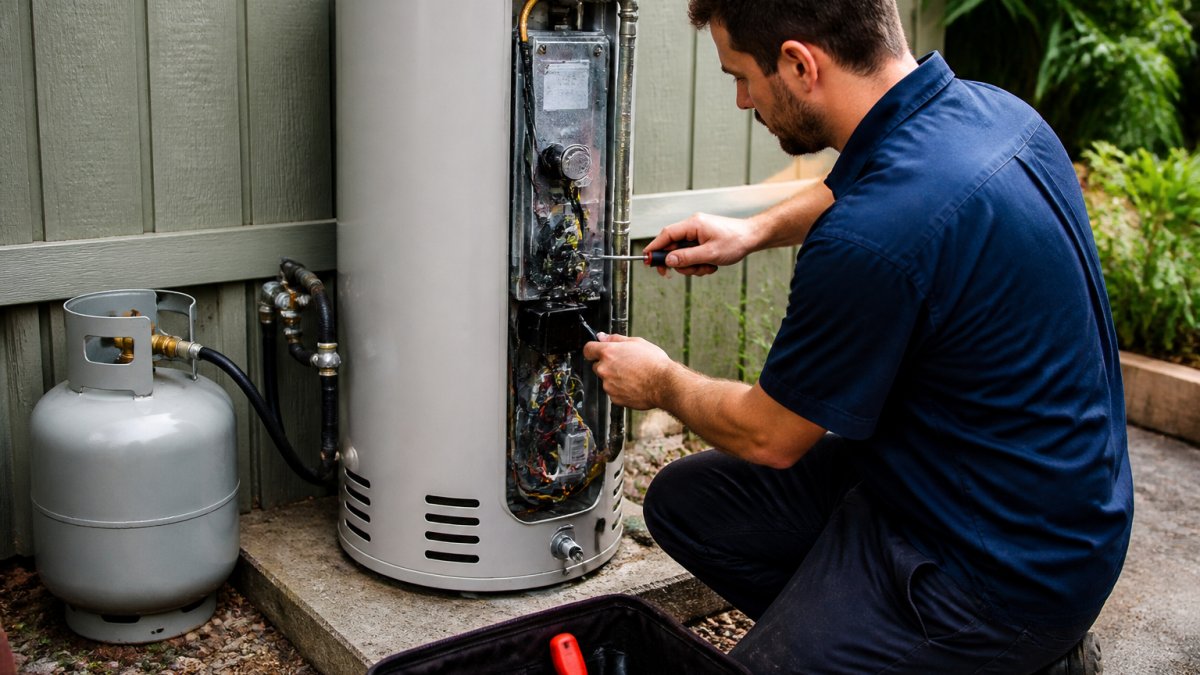
LPG Hot Water System Servicing Kyogle: A Homeowner's Guide
Last Updated: November 1, 2026
Quick Summary
LPG hot water system servicing Kyogle homes should be booked once a year, with the visit brought forward if you notice warning signs like a pilot light that keeps going out. A service is a scheduled inspection, cleaning and testing of the burner, flue, anode and safety controls by a licensed gas fitter, not a repair.
- A service checks the gas train, water side and exhaust path, then reports findings in plain language.
- A pilot light that won't stay lit usually points to a dirty orifice, faulty thermocouple, draft or gas supply problem.
- If you smell gas, turn off the cylinder valve, avoid electrical switches, ventilate and leave the area.
- Never block a relief valve or flue, and never adjust the burner or gas pressure yourself.
- Service cost depends on system type and age, access, condition, parts and travel, with an upfront price given.
Table of Contents
- Why LPG Hot Water Servicing Matters in Kyogle
- LPG Hot Water System Maintenance: What a Service Actually Covers
- When Your Hot Water System Pilot Light Keeps Going Out
- LPG Hot Water System Safety Checks Every Homeowner Should Know
- How Often to Book Servicing and the Signs You Need It Sooner
- LPG Hot Water System Service Cost: What Drives the Quote
- Booking Your LPG Hot Water Service in Kyogle
- Frequently Asked Questions
Why LPG Hot Water Servicing Matters in Kyogle
If your lpg hot water system servicing kyogle is overdue, you're not alone. Rural and off-grid homes across the Richmond Valley lean on bottled gas because there's no mains supply to fall back on, so a neglected system doesn't just cost more to run, it can leave you without hot water entirely. Northern Rivers Hot Water has more than 20 years of local experience servicing gas, electric and heat pump systems across the region.
LPG hot water servicing is the scheduled inspection, cleaning and testing of a gas hot water system's burner, flue, anode and safety controls by a licensed gas fitter. It's not the same as a repair. A service catches wear before it becomes a breakdown.
That distinction matters more in Kyogle than in town. Bottled gas, tank refills and long driveways change how a system behaves and how quickly a small fault becomes a cold shower. Below, we'll walk through what a service actually covers, the warning signs worth acting on, and how to book without surprise charges.
LPG Hot Water System Maintenance: What a Service Actually Covers
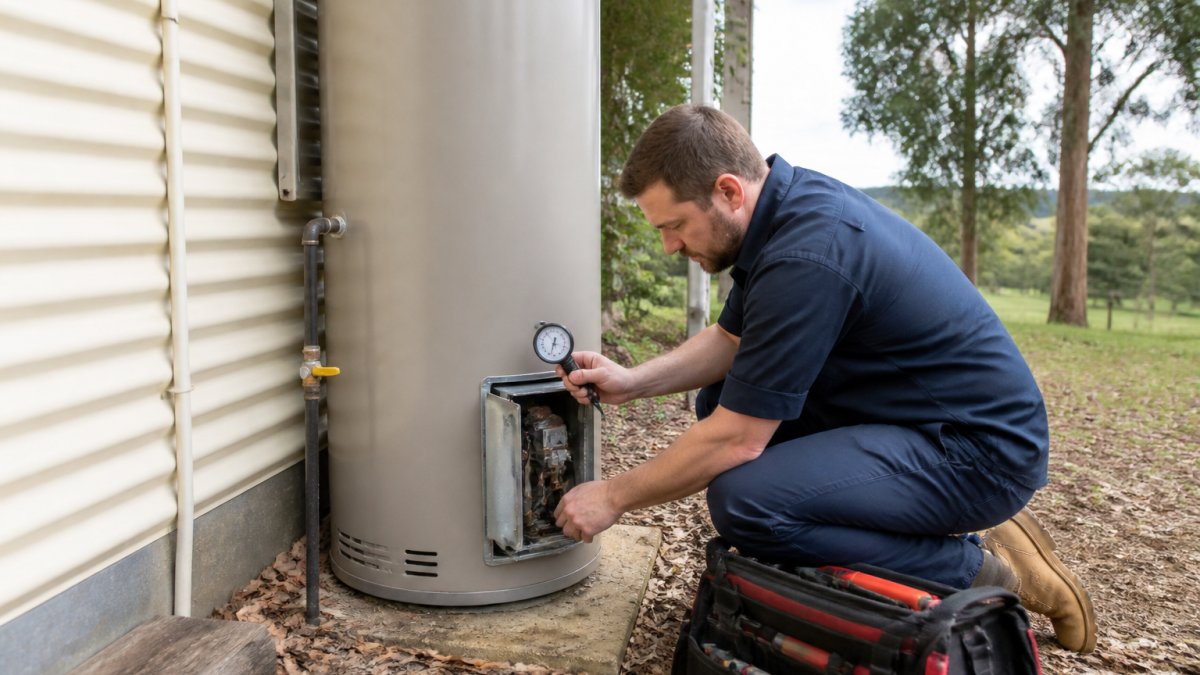
A proper LPG hot water system maintenance visit is a checklist, not a quick glance. A proper service covers the gas train, the water side and the exhaust path, followed by a plain-language report of findings. What gets checked depends on whether you have a storage cylinder or a continuous-flow unit.
Storage LPG systems
A storage unit holds a tank of hot water and reheats it as you draw it down.
Continuous-flow LPG systems
A continuous-flow (instantaneous) unit heats water as it passes through a heat exchanger, so there is no storage tank and no anode to replace.
What the technician should tell you afterwards
A good service ends with a plain-English rundown of what was checked and what may need attention, and you can ask the technician to explain the condition of key components. If you need an LPG hot water specialist, you can find out more on our gas hot water systems in Kyogle page.
When Your Hot Water System Pilot Light Keeps Going Out
A pilot light that won't stay lit usually points to one of four things: a dirty pilot orifice, a faulty thermocouple, a draft affecting the flue, or a gas supply problem. It is rarely random, and it should never be ignored on an LPG unit.
The thermocouple is the small sensor that tells the gas valve the pilot is burning. When it fails, the valve shuts off gas as a safety measure, which is exactly what it's meant to do. A dirty orifice or a flue drawing poorly can produce the same symptom. If your hot water system pilot light keeps going out, resist the urge to keep relighting it and hoping. Repeated relights can mask a gas or venting fault. If you want to work through the basics first, our step-by-step no hot water guide walks you through safe checks before you call anyone.
LPG Hot Water System Safety Checks Every Homeowner Should Know
LPG hot water system safety checks are the part of servicing you can do yourself, and the part that matters most. Gas is safe when the appliance and its ventilation are right. It's when both slip that problems start. This is the guidance most service pages skip, so treat it as your between-service routine.
What to check between services:
- The flue terminal is clear of leaves, nests and overgrown plants
- No soot, scorching or yellow lazy flame at the burner
- The pressure and temperature relief valve isn't dripping constantly
- Gas cylinders are secure, upright and within their test date
- You can smell gas near the unit or connections
- The area around the unit is clear of stored items, paint tins and garden chemicals
If you smell gas
A gas smell is the one situation where you act first and investigate later:
- Turn the gas supply off at the cylinder valve.
- Extinguish naked flames and do not operate electrical switches, including light switches.
- Open doors and windows to ventilate the area.
- Leave the area and keep others away.
- Call a licensed gas fitter. Do not test connections with a match or a lighter, and do not try to trace the leak yourself.
What not to do
Never tape over, block or "seal" a relief valve or flue to stop a drip or a draft. Those parts release pressure and exhaust for a reason, and blocking them turns a small fault into a dangerous one. Do not enclose an outdoor unit in a sealed cupboard, do not store gas cylinders near the appliance, and do not attempt to adjust the burner or gas pressure yourself. Work on the gas train is licensed work for a reason.
If you want to work through the basics before you call anyone, our step-by-step no hot water guide walks you through safe checks. For anything involving gas smell, flame colour or the flue, call a licensed gas fitter rather than troubleshooting further.
How Often to Book Servicing and the Signs You Need It Sooner
Booking a service once a year is a sensible routine for most households, as it can help catch wear and fouling before it becomes a repair.
Bring the booking forward if you notice:
- Hot water running out faster than it used to
- The pilot light repeatedly going out
- Rumbling, popping or knocking from the tank
- Rust-coloured water at the tap
- A yellow or uneven burner flame
- Rising gas use for the same amount of hot water
If you're ready to schedule, you can book an annual hot water service with our licensed team.
Book a service once a year, and bring it forward if you notice any of these signs.
| Sign or trigger | What to do |
|---|---|
| Routine servicing | Book once a year |
| Hot water running out faster | Bring the booking forward |
| Pilot light repeatedly going out | Bring the booking forward |
| Rumbling, popping or knocking from tank | Bring the booking forward |
| Rust-coloured water at the tap | Bring the booking forward |
| Yellow or uneven burner flame | Bring the booking forward |
| Rising gas use for same hot water | Bring the booking forward |
LPG Hot Water System Service Cost: What Drives the Quote
LPG hot water system service cost depends on the system, its condition and what the visit uncovers, so a fixed figure quoted over the phone may not be accurate. What we can tell you is what moves the number up or down.
The main factors:
- System type and age. Older units and less common models take longer to access and inspect.
- Access. A unit tucked behind a shed or down a steep bank adds time.
- Condition. A well-maintained system is a straightforward service; a neglected one may need parts.
- Parts. Anodes, thermocouples and valves are priced separately, and you approve them before work starts.
- Travel. Rural properties further out affect scheduling, not the service itself.
We give a clear, upfront price before work begins. If the system is nearing the end of its life, it's worth knowing how long it should last before you spend on repairs. Our guide on how long a hot water system lasts explains the typical lifespan by type and when replacement makes more sense.
Booking Your LPG Hot Water Service in Kyogle
Booking starts with a call or a quote request, and the visit should be straightforward: we confirm the system, the access and the price, then service it and tell you what we found.
For Kyogle and Richmond Valley homes, our hot water services in Kyogle page covers LPG, electric and heat pump systems, including rural and off-grid installs and repairs. We're locally owned, hold NSW Plumbing Licence 230095C, and offer same-day emergency response.
A hot water system that's been ignored for a few years rarely fails at a convenient time. If your LPG unit is due, or you've noticed the pilot struggling or the hot water fading, get it looked at before it becomes an emergency. Northern Rivers Hot Water works with major brands including Rinnai, Rheem and Dux, with upfront pricing before work begins, no call-out fee for quotes, and same-day emergency response across the Northern Rivers. Get started with Northern Rivers Hot Water and get your hot water back to reliable.
Frequently Asked Questions
How often should an LPG hot water system be serviced?
Most manufacturers recommend a full service every 12 months, and annual servicing is the practical baseline for LPG systems in rural and off-grid properties. LPG burns differently from natural gas and burner components, flues and pressure relief valves need checking more often than many homeowners expect. If your system is older, sits on a property with dusty or windy conditions, or has had pilot light problems before, sticking to a yearly booking is the simplest way to avoid a mid-winter failure. Ask your technician to note the service date on the unit.
Why does my hot water system pilot light keep going out?
A pilot light that keeps going out usually points to a thermocouple that has failed or drifted out of position, a dirty pilot orifice, a gas supply issue, or a flue that is not drawing properly. In Kyogle and surrounding rural areas, dust, insect nests and wind exposure can all affect the pilot assembly. Relighting once is fine, but repeated outages mean the underlying fault needs diagnosing by a licensed gas fitter. Do not keep relighting a pilot that will not stay lit, because unburnt gas can accumulate.
What does an LPG hot water system service cost?
LPG hot water system service cost depends on the system type, its condition, how accessible it is on your property, and whether parts like a thermocouple or anode need replacing. Remote or off-grid properties may affect scheduling. Northern Rivers Hot Water does not charge a call-out fee for quotes, so you can get an upfront figure before any work starts. Request a quote with your system make, model and location so the pricing reflects your actual job rather than a generic estimate.
Can I relight my LPG hot water system myself?
You can usually follow the manufacturer's relight instructions printed on the unit, which typically involve turning the gas control to pilot, holding the button down and using the igniter. What you should not do is repeatedly relight a system that keeps going out, or attempt to repair the pilot assembly, thermocouple or gas connections yourself. Work on gas appliances must be done by a licensed gas fitter. If you smell gas, turn the supply off, ventilate the area, avoid flames and switches, and call a licensed technician.

Need help with your hot water system?
Call Northern Rivers Hot Water for a free, no-obligation quote. We service Lismore, Ballina, Byron Bay, Casino and all surrounding areas.
0472 580 441