
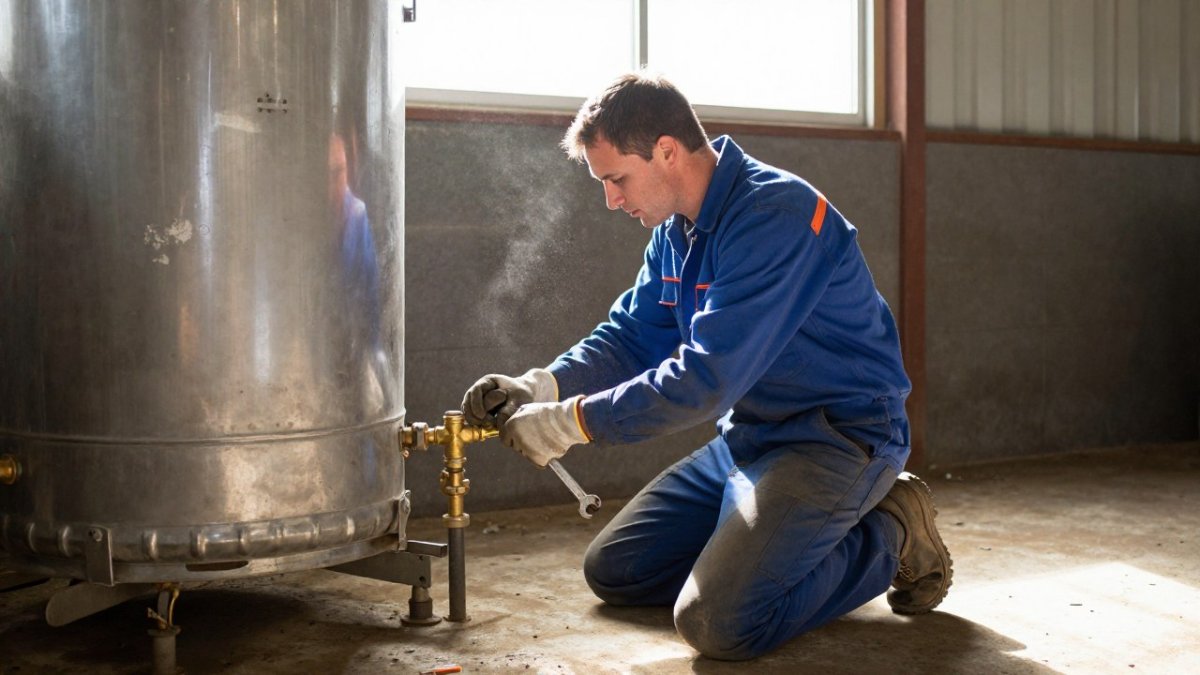
Hot Water Systems for Livestock Facilities: A Guide
Quick Summary
Hot water systems for livestock facilities keep drinking water, washdown water and equipment at the right temperature. Size the system by listing every daily use, such as stock troughs, washdown, sanitising and staff amenities, then sizing for peak demand rather than the average.
- List every hot water use and work out litres per day before choosing a system.
- Size for peak use, not average use.
- Insulating the tank or waterer and adding wind protection reduces heat loss.
- Heat pumps suit sites with electricity supply and can qualify for rebates.
- Gas systems recover quickly where mains or LPG supply is reliable.
Table of Contents
- Sizing Hot Water for Livestock Facility Demand
- Choosing a System: Heat Pumps, Gas and Solar for Farms
- Keeping Your Farm Hot Water System Running: Maintenance Steps
- Frequently Asked Questions
Sizing Hot Water for Livestock Facility Demand
Hot water in a livestock facility keeps drinking water, washdown water and equipment at the right temperature. Start by adding up your daily demand.
List every use: stock drinking troughs (temperature matters most in cold weather), dairy or yard washdown, cleaning and sanitising, and staff amenities. Work out litres per day, then size for peak use, not the average.
Farm Energy Extension livestock watering checklist on insulation and wind protection to reduce heat loss
Insulating the tank or waterer and adding wind protection reduces heat loss, lowering the energy needed to hold the target temperature. Pricing depends on system size, fuel type and installation, so contact Northern Rivers Hot Water for a quote.
Choosing a System: Heat Pumps, Gas and Solar for Farms
Compare system types on running cost, reliability and your power or gas supply.
- Heat pump: Efficient where electricity is available, and it can qualify for rebates.
- Gas: Fast recovery where mains or LPG supply is reliable.
- Solar: Low running cost on sunny sites, but needs backup for cloudy periods.
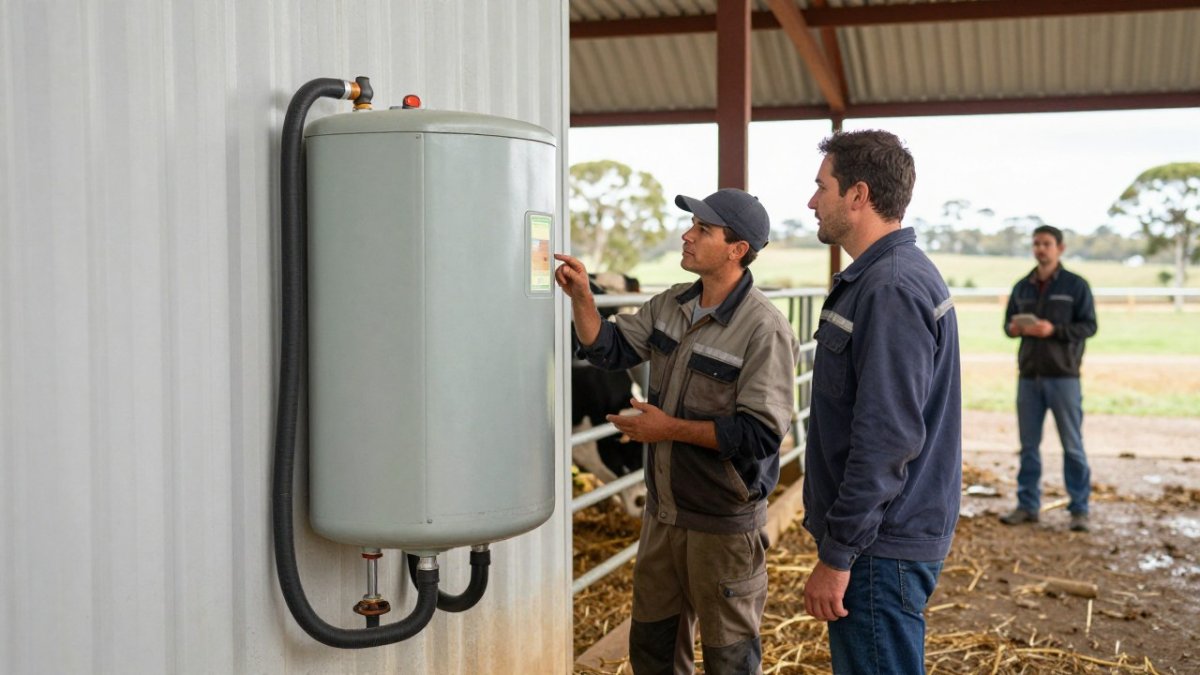
Our heat pump hot water installation details page covers installation and energy savings, and our heat pump vs gas vs electric comparison article compares running costs.
The three system types differ mainly in running cost, reliability and the supply each depends on.
| System | Best for | Key difference |
|---|---|---|
| Heat pump | Sites with electricity supply | Efficient; can qualify for rebates |
| Gas | Sites with reliable mains or LPG | Fast recovery |
| Solar | Sunny sites | Low running cost; needs backup for cloudy periods |
Keeping Your Farm Hot Water System Running: Maintenance Steps
Regular checks help catch problems early: inspect the tank and connections for leaks, check the temperature setting, and clear sediment or debris.
Book a professional annual service through our book a hot water service page, covering planned maintenance and emergency callouts across the Northern Rivers.
Need reliable hot water for your livestock facility? Northern Rivers Hot Water sizes, installs and services systems across the Northern Rivers, including gas, electric and heat pump options.
Frequently Asked Questions
What type of hot water system is best for a livestock facility?
The best choice depends on daily demand, available energy and whether the site has mains gas or reliable power. Heat pump systems suit many farms because they run efficiently on electricity, while gas units can handle high peak draws where gas supply is available. Solar systems work well with backup, but on cloudy days they need a dependable top-up source. Have a licensed plumber measure your actual daily usage before deciding. Contact Northern Rivers Hot Water for a quote; pricing depends on system size, access and installation requirements.
How should hot water systems for livestock facilities be maintained?
Check the system at least twice a year. Inspect the tank and pipework for leaks, flush sediment from the tank according to the manufacturer's instructions, and confirm the temperature and pressure relief valve operates correctly. For heat pumps, clean the air intake and fins so airflow is not restricted. Insulate exposed pipes and storage tanks to reduce heat loss, and keep a record of service dates. A licensed plumber should handle any gas or electrical work.

Need help with your hot water system?
Call Northern Rivers Hot Water for a free, no-obligation quote. We service Lismore, Ballina, Byron Bay, Casino and all surrounding areas.
0472 580 441